Effective Fall Prevention for Seniors — A BlueDot Cares Guide
Falls are one of the most common threats to an older adult’s independence. This guide pulls together practical, evidence-informed ways to reduce fall risk: easy home fixes, medication and health checks, targeted exercises, and professional help. You’ll get clear, actionable steps — room-by-room safety tips, simple balance and strength moves, and a straightforward fall risk checklist to use at home.
At BlueDot Cares, we take proven fall-prevention practices and turn them into simple checklists families can follow with confidence.
“After more than two decades working with families, we know fall prevention is about more than avoiding injury — it’s about protecting dignity and keeping people independent. At BlueDot Cares we base our approach on practical, personalized steps that empower seniors and ease families’ worries.” — Jimmy Clonaris, Managing Partner, BlueDot Cares
Which fall-prevention steps reduce risk the fastest?
Focus first on high-impact changes that make a big difference quickly. The most effective programs blend basic home modifications, regular strength and balance work, medical risk reviews, and properly fitted assistive devices.
Priority tips to reduce fall risk:
- Improve lighting and clear trip hazards: Bright, even lighting and unobstructed walkways cut down trips.
- Install secure grab bars and non-slip surfaces in bathrooms: These supports make transfers safer where slips are most common.
- Build strength and balance with regular exercise: Consistent routines improve stability and confidence.
- Review medications for side effects: Talk to a clinician about dizziness or drowsiness.
- Check vision, hearing, and feet: Sensory checks and proper footwear help with safe movement.
- Use assistive devices the right way: Get professional advice to choose and fit the correct device.
Which home safety changes matter most for preventing falls?
Simple environmental fixes remove common hazards and make daily movement easier. Grab bars, non-slip mats, and clearly marked stair edges directly reduce slips and trips. Start with the highest-risk rooms — bathroom, kitchen, and stairs.
How do balance exercises help seniors stay steady?
Balance work strengthens muscles and the nervous system’s coordination, improving reaction time, posture, and confidence. Exercises that target ankles, hips, and core — plus standing balance drills — translate into safer, steadier movement.
Simple progression for balance training:
- Begin seated: Marching in place and heel-to-toe taps to build a base.
- Progress to supported standing: Use a sturdy chair or countertop for single-leg stands.
- Advance to dynamic tasks: Controlled weight shifts and step-ups to challenge stability.
What does a home safety assessment do to prevent falls?
A home safety assessment finds hazards, connects them to a person’s mobility and health, and delivers prioritized fixes and device suggestions. The assessor watches movement and inspects spaces, then gives clear, practical recommendations families can act on.
What to expect during an assessment:
- Initial walk-through to spot hazards
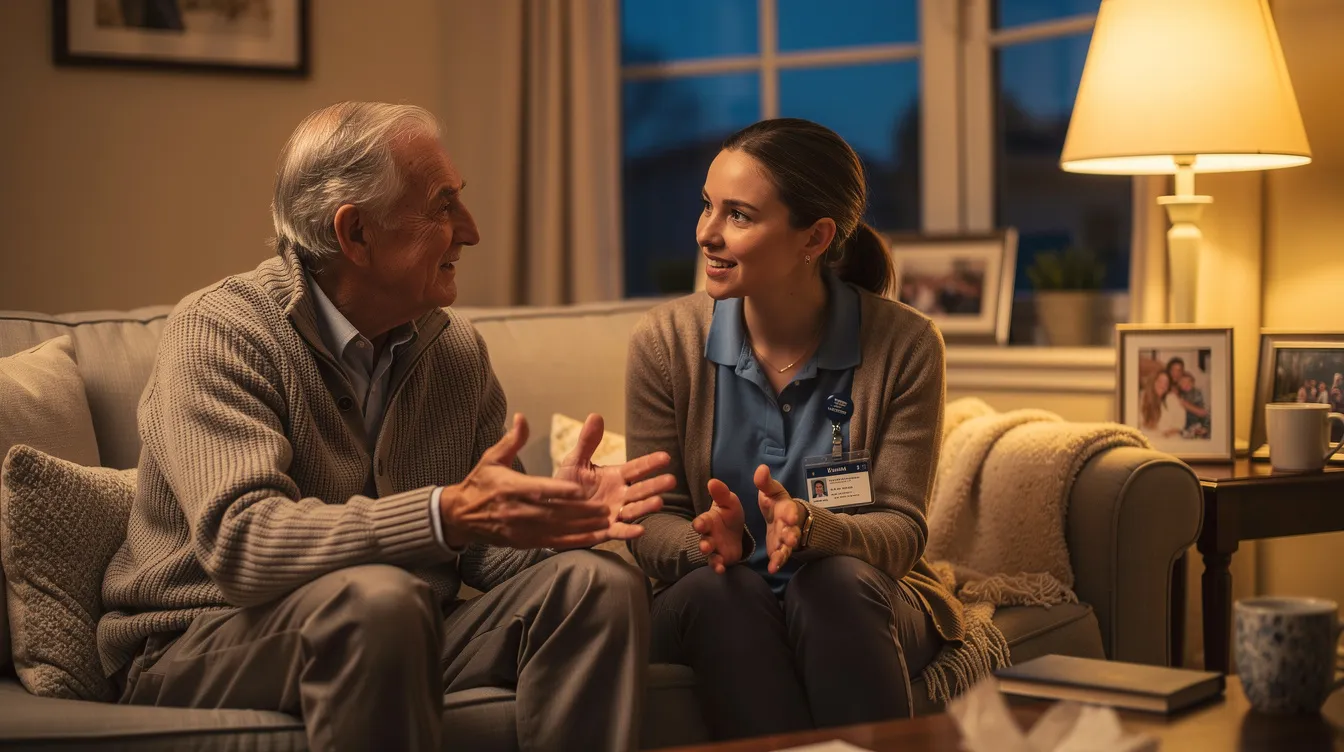
- Mobility observation and caregiver interview
- Action plan with prioritized fixes and referrals
Common hazards and quick fixes for bathrooms, kitchens, and living areas
Bathrooms, kitchens, and living rooms often contain the hazards that lead to falls. Start with the rooms where the senior spends the most time or where near-misses have happened.
- Bathroom quick fixes: Non-slip mats, anchored grab bars, and a hand-held shower head.
- Kitchen quick fixes: Keep floors clear, use a stable step stool, and secure rugs.
- Living area quick fixes: Re-route cords, widen clear paths, and anchor loose rugs.
How do grab bars and mobility aids reduce fall risk?
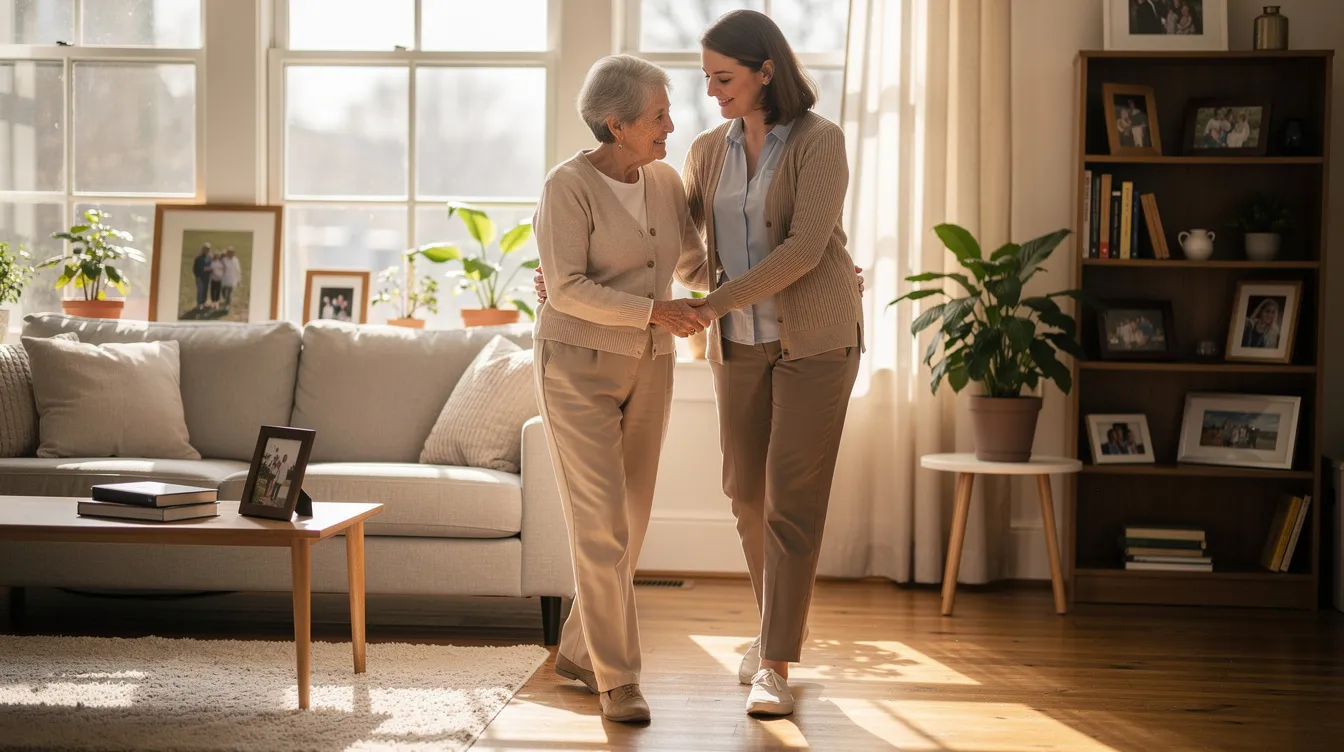
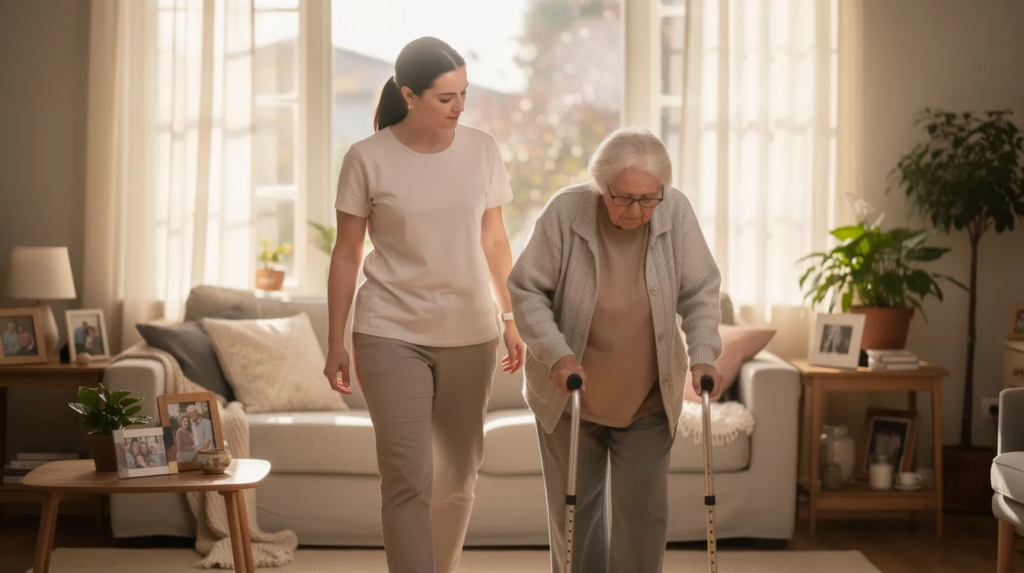
Grab bars and assistive devices provide mechanical support where it’s needed. Properly installed grab bars are reliable anchors. Ramps, stair handrails, raised toilet seats, and mobility aids reduce strain and help maintain safer body mechanics. Professional guidance ensures correct sizing and placement.
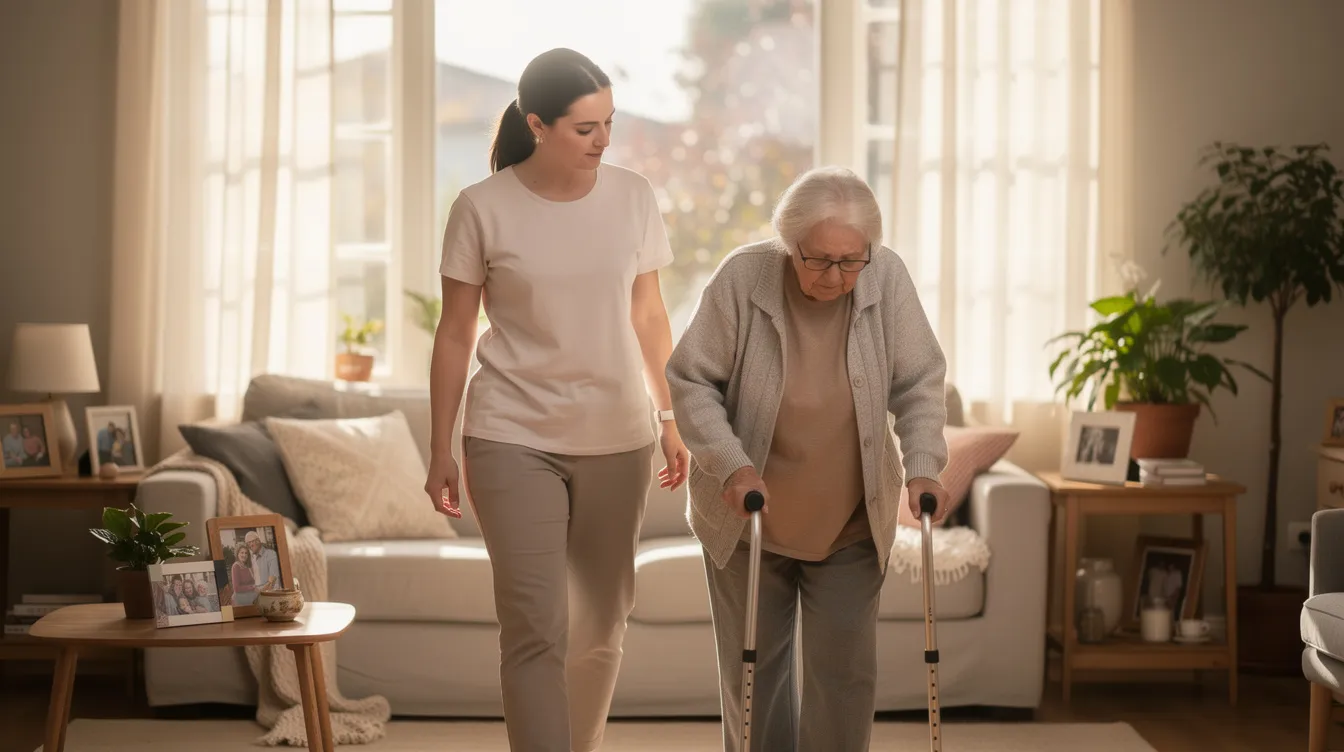
- Choose devices for individual needs: Use a walker for gait instability; a cane for mild balance issues.
- Ensure secure installation: Professionally mounted grab bars are less likely to fail.
- Train on correct use: Caregivers and therapists should show safe techniques.
What role does overall health play in preventing falls?

Health directly affects fall risk. Muscle weakness, sensory loss, and chronic illnesses can reduce balance and mobility. Regular health reviews — medication reconciliation, vision and hearing checks, and foot care — reveal risks that can often be improved.
How does medication management lower fall risk?
Certain drugs and polypharmacy can cause dizziness or cognitive side effects that raise fall risk. A medication review with a clinician or pharmacist can identify high-risk medicines and suggest safe adjustments. Pill organizers and caregiver oversight reduce dosing errors.
Medication review steps:
- Make a complete list of all prescription and over-the-counter drugs.
- Check for high-risk classes and potential interactions.
- Work with the prescriber to adjust the plan safely.
Why are vision, hearing, and foot health important?
Vision, hearing, and foot health all help a person navigate their environment. Changes in any of these areas can affect balance and gait. Regular sensory screenings, supportive footwear, and timely referrals to podiatry or audiology are practical, effective steps.
Actionable steps:
- Schedule screenings: Get vision and hearing checks at least once a year.
- Improve footwear: Choose supportive, well-fitted shoes with non-slip soles.
- Treat foot problems: See a podiatrist and consider orthotics when needed.
How can professional services boost fall prevention?
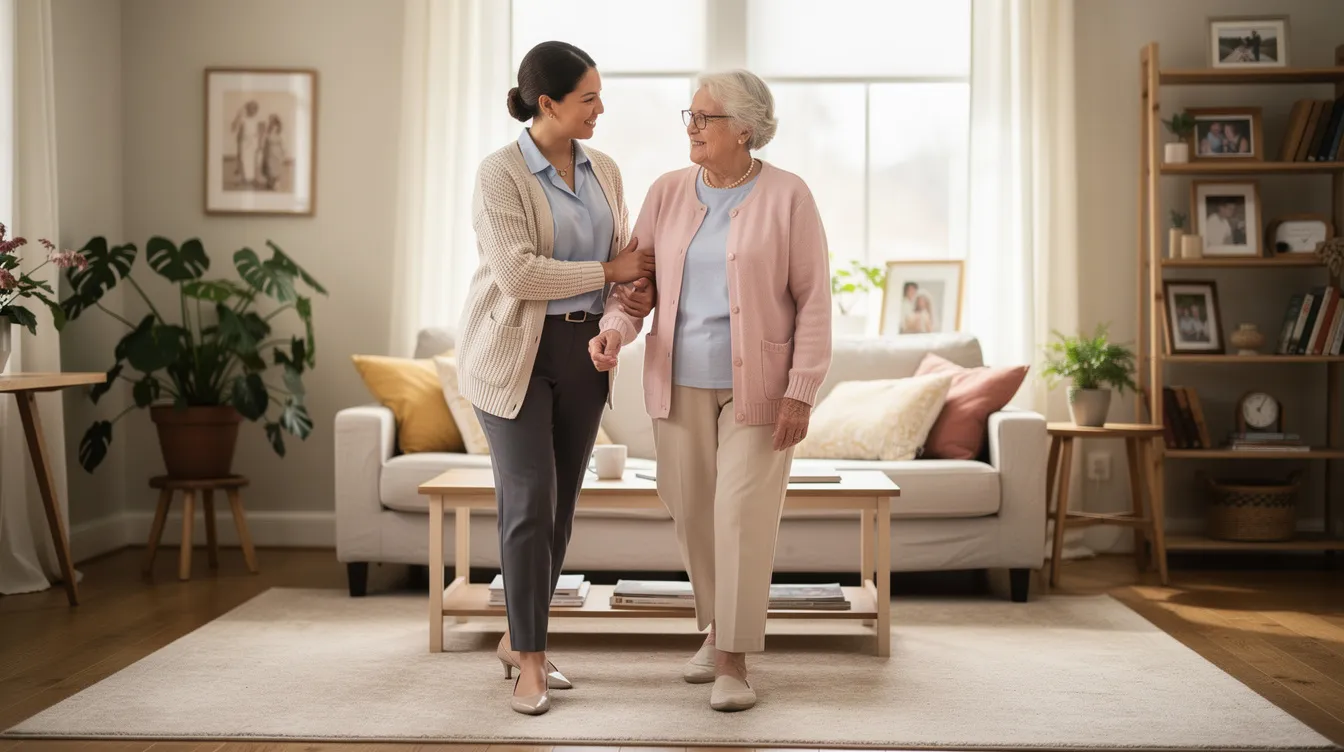
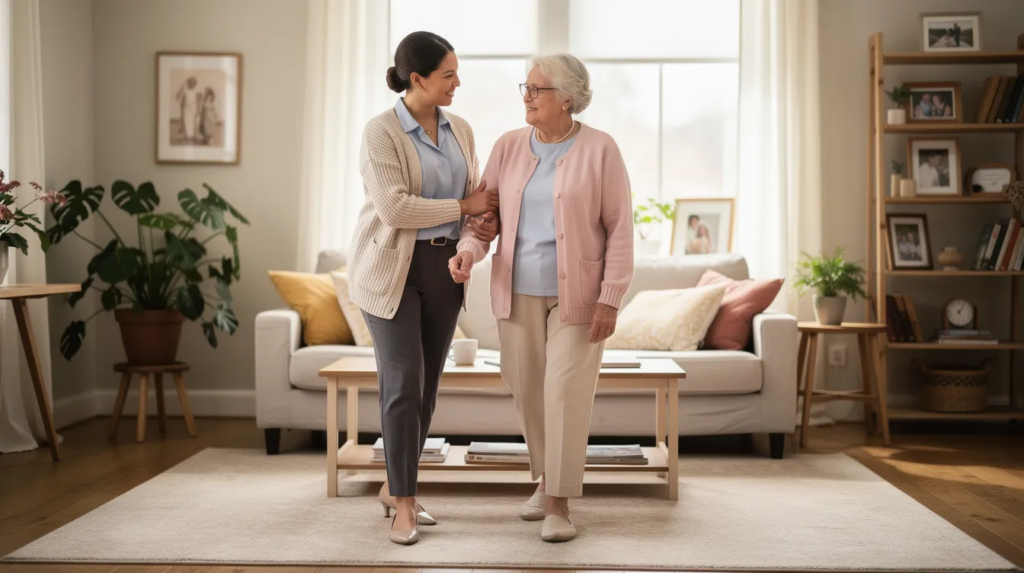
Professionals help turn assessment recommendations into sustained practice. In-home caregivers support safe transfers and light housekeeping. Placement advisors match people to communities with safety features and trained staff. Home safety assessors and therapists recommend lasting fixes and rehabilitation plans.
What in-home services does BlueDot Cares provide for fall prevention?
BlueDot Cares, Inc. offers in-home care and senior placement support with fall prevention built in. Our services include mobility assistance, light housekeeping, personal care, and home safety assessments. We help families compare senior living options and advise on assistive devices. Coordinated assessments and caregiver plans are available on request.
“BlueDot Cares was a lifesaver for our family. Their caregivers not only handle daily tasks but also check the home for safety, which brings us real peace of mind. We’ve watched Mom gain confidence and move more steadily.” — A Grateful Family, Charlotte, NC
How to evaluate senior living for safety in North Carolina and Ohio
When touring communities, look for design and program elements that lower fall risk: continuous handrails, non-slip flooring, trained staff, emergency response systems, and on-site therapy. Our placement advisors can match needs with communities across North Carolina (including the Charlotte area) and Ohio.
Checklist for community safety:
- Design features: Continuous handrails, clear paths, and non-slip floors.
- Staff & programs: Transfer training, on-site rehab, and regular exercise classes.
- Policies: Fall reporting and individualized safety plans.
How can seniors practice balance and strength safely?
Regular balance and strength work improve the body’s ability to recover from trips and maintain steady mobility. Programs that focus on lower-limb strength, core stability, and proprioception are linked to fewer falls. Start with supervised sessions and increase difficulty slowly.
Simple balance exercises seniors can do at home
Build stability with safe, progressive exercises. Begin with seated marches and ankle pumps, then move to standing heel-to-toe steps, supported single-leg stands, and controlled weight shifts. Short sessions (10–20 minutes, three times a week) are effective.
- Seated marches: 1–2 minutes to warm up.
- Supported single-leg stand: 10–20 seconds per side, repeat 3 times.
- Heel-to-toe walk: 10 steps forward, repeat 2–3 times.
How do Tai Chi and strength training help mobility?
Tai Chi improves balance through slow, controlled movements that sharpen coordination and proprioception. Strength training for the legs and core boosts the power needed for safe transfers and recovering from slips.
Program suggestions:
- Start with beginner Tai Chi classes geared to older adults.
- Do light resistance or bodyweight strength sessions twice a week.
What are the key steps in a senior fall risk assessment?

A fall risk assessment combines a medical review, mobility tests, and a room-by-room safety check to create an actionable plan. Typical steps include collecting medical history, running simple mobility tests (like the Timed Up and Go), inspecting rooms for hazards, and prioritizing fixes.
Step-by-step assessment:
- Medical and medication review: Identify clinical contributors to fall risk.
- Functional mobility testing: Timed Up and Go and gait observation.
- Home safety inspection: Check stairs, bathrooms, lighting, and pathways.
- Action plan: Prioritized fixes, recommended equipment, referrals, and follow-up.
How can families spot high fall risk in older adults?
Families can notice higher fall risk by watching for frequent stumbling, unsteady transfers, slower walking, recent falls or near-misses, or leaning on furniture for support. Quick in-home checks — like timing a short walk — give useful insight.
Family checklist:
- Recent falls or near-misses
- Difficulty rising from a chair
- New medication or dizziness
- Noticeable gait changes or shuffling
When should seniors get a professional fall risk evaluation?
Arrange a professional evaluation after any fall, when walking or balance changes, after starting a medication that causes dizziness, or when caregivers see declining function. Professionals include primary care providers, physical and occupational therapists, and certified home safety assessors.
- Triggers for evaluation: A fall, new symptoms, or medication changes.
- Who to consult: PCP for medical causes; PT/OT for rehab; home assessors for modifications.
- What to expect: Objective tests, an environment review, and a clear action plan.
If your family needs help putting a fall prevention plan into action or exploring safer living options, BlueDot Cares, Inc. provides in-home care, home safety assessments, mobility support, and senior living placement focused on safety and respect. Our teams can coordinate caregiver-assisted exercises, conduct safety assessments, and review local placement options in North Carolina and Ohio.
Frequently Asked Questions
What are the signs a senior may be at high risk for falls and needs immediate prevention?
Watch for frequent stumbling, trouble balancing when transferring, slower walking, and leaning on furniture. Recent falls or near-misses are strong signals that a professional evaluation is needed.
How often should seniors have vision and hearing checked as part of fall prevention?
Have vision and hearing screened at least once a year, or sooner if you notice changes. Regular checks address issues that affect balance and spatial awareness.
What role does physical therapy play in fall prevention?
Physical therapy delivers personalized exercise plans to build strength, balance, and coordination. Therapists assess mobility, tailor interventions, and teach safe use of assistive devices, which can significantly reduce fall risk.
How can families help seniors keep fall-prevention measures effective?
Families can maintain home modifications, encourage regular exercise, schedule health checks, and stay alert for changes. Ongoing communication with providers keeps the prevention plan working.
What assistive devices are commonly recommended to prevent falls?
Commonly recommended devices include properly mounted grab bars, walkers, canes, and raised toilet seats. Professional fitting and installation are important to make them safe and effective.
What should seniors do after a fall, and how does it change prevention plans?
If a fall happens, check for injuries and seek medical care as needed. Afterwards, review the prevention plan with providers to identify environmental, medication, or exercise changes to reduce future risk.
How can community resources support fall prevention?
Local health departments, senior centers, and non-profits often offer home safety checks, exercise classes, and education workshops. These resources provide practical help and social connection while improving safety.
Conclusion
Being proactive about fall prevention preserves safety and independence. Combining home changes, regular exercise, medical reviews, and professional support cuts risk. Start with high-impact fixes, keep up balance and strength work, and bring in specialists when needed. Contact BlueDot Cares to learn more or schedule a personalized assessment.
About the Author
Jimmy Clonaris, Managing Partner at BlueDot Cares, has spent over two decades supporting families in the Charlotte area. His leadership has shaped stronger caregiver training, higher safety standards, and a culture focused on dignity and practical care. Jimmy’s commitment helped make BlueDot Cares a trusted home-care partner for many families.

Jimmy Clonaris is Managing Partner at BlueDot Cares, where he oversees operations, caregiver standards, and service delivery for in-home care across the organization. With more than 19 years of experience in healthcare and over a decade with BlueDot, he has been directly involved in building and scaling care programs that support individuals aging at home.
His work focuses on the practical side of care delivery. This includes caregiver training and oversight, care plan consistency, and coordination with families and local healthcare professionals. Jimmy is actively involved in ensuring that care is not only well-structured on paper, but executed reliably in the home.
Over the course of his career, he has worked with thousands of families navigating care decisions, from short-term recovery support to long-term in-home care. His approach is grounded in clear communication, accountability, and building systems that allow caregivers to deliver consistent, high-quality support.
Under his leadership, BlueDot Cares has grown to support tens of thousands of families while maintaining a locally operated, relationship-driven model. He continues to focus on strengthening the team, improving care standards, and ensuring families have a dependable partner when care is needed.