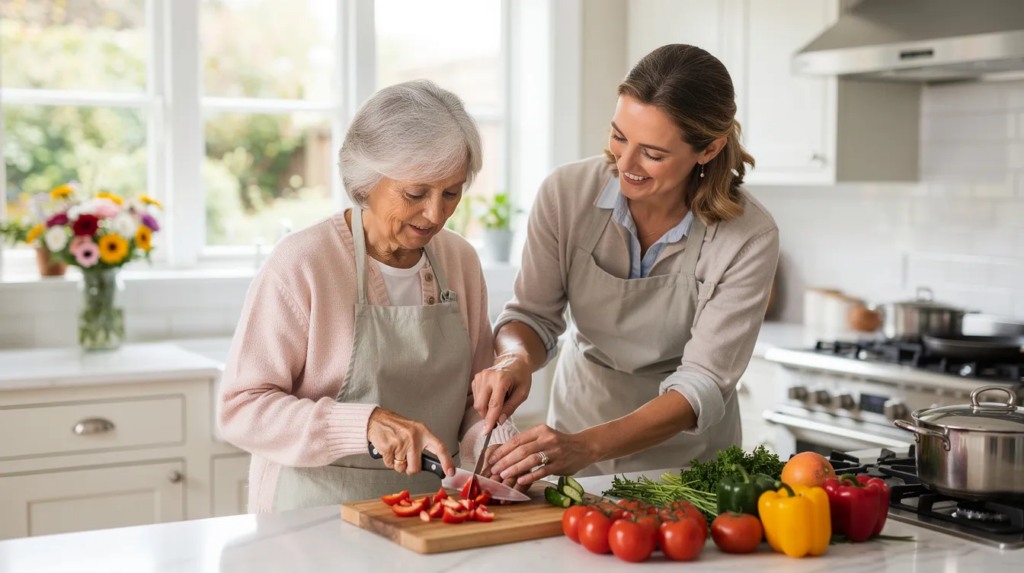
Dehydration in seniors is an overlooked but potentially quite serious health issue.
Overview
Seniors often stand at an increased risk of becoming dehydrated. The primary reason for this is that an individual’s sense of thirst dissipates as they grow older. Therefore, even in circumstances where the body has lost fluid and needs replenishing, the person in question does not feel such urges and fails to ingest an adequate supply of liquids. Oftentimes, when aged individuals do feel thirsty, their systems might already be in the throes of early staged dehydration.
Complicating this age-related phenomenon is that many seniors ingest both prescription and over-the-counter medications that might deplete systemic water supply or are stricken with medical conditions of which dehydration might be a symptom or possible complication.
Further compounding an already potentially serious situation is that the early symptoms of dehydration often go unnoticed or are relatively minor. Unfortunately, afflicted seniors might not realize they are in danger until experiencing more significant manifestations such as confusion or a rapid pulse.
Preventing Elderly Dehydration
Fortunately, preventing elderly dehydration might be accomplished by adherence to the following important tips:
Consuming Water Throughout The Day
When it comes to drinking water, seniors are strongly encouraged to begin early and end late. Executing said action will ensure that the individual in question obtains a steady flow of liquids each day. Moreover, said individuals are urged to drink even when they do not feel the desire and in colder temperatures.
Limiting Alcohol And Caffeine Intake
There is nothing wrong or typically detrimental associated with enjoying a good cup of coffee or a favored adult beverage from time to time. However, alcoholic and caffeinated beverages consumed in excess often elicit a diuretic impact upon the body. Diuretic substances increase production and output of urine. Increased urinary output can lead to rapid loss of fluids and worsening dehydration.
Identifying Beverages Other Than Water
Many people do not like the taste of water. Seniors who find themselves in this predicament are strongly encouraged to identify another slightly caffeinated, non-alcoholic beverage of choice. Viable options include milk, fruit juices and decaffeinated sodas and teas.
Consuming Foods With High Water Contents
Eating foods with high water concentrations is another productive method preventing elderly dehydration. Such items include produce products such as fruits and vegetables like leafy greens, citrus and berries, various soups, yogurt, cottage cheese and soy milk.

Jimmy Clonaris is Managing Partner at BlueDot Cares, where he oversees operations, caregiver standards, and service delivery for in-home care across the organization. With more than 19 years of experience in healthcare and over a decade with BlueDot, he has been directly involved in building and scaling care programs that support individuals aging at home.
His work focuses on the practical side of care delivery. This includes caregiver training and oversight, care plan consistency, and coordination with families and local healthcare professionals. Jimmy is actively involved in ensuring that care is not only well-structured on paper, but executed reliably in the home.
Over the course of his career, he has worked with thousands of families navigating care decisions, from short-term recovery support to long-term in-home care. His approach is grounded in clear communication, accountability, and building systems that allow caregivers to deliver consistent, high-quality support.
Under his leadership, BlueDot Cares has grown to support tens of thousands of families while maintaining a locally operated, relationship-driven model. He continues to focus on strengthening the team, improving care standards, and ensuring families have a dependable partner when care is needed.