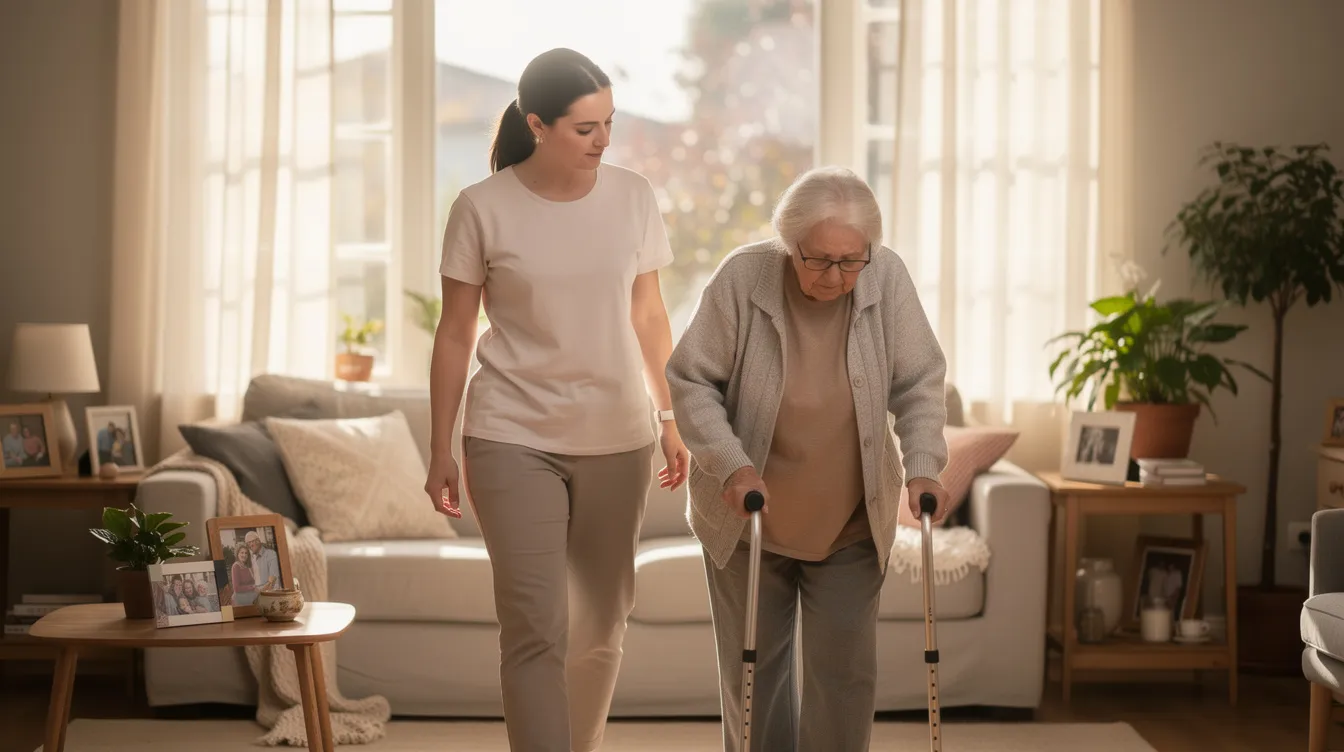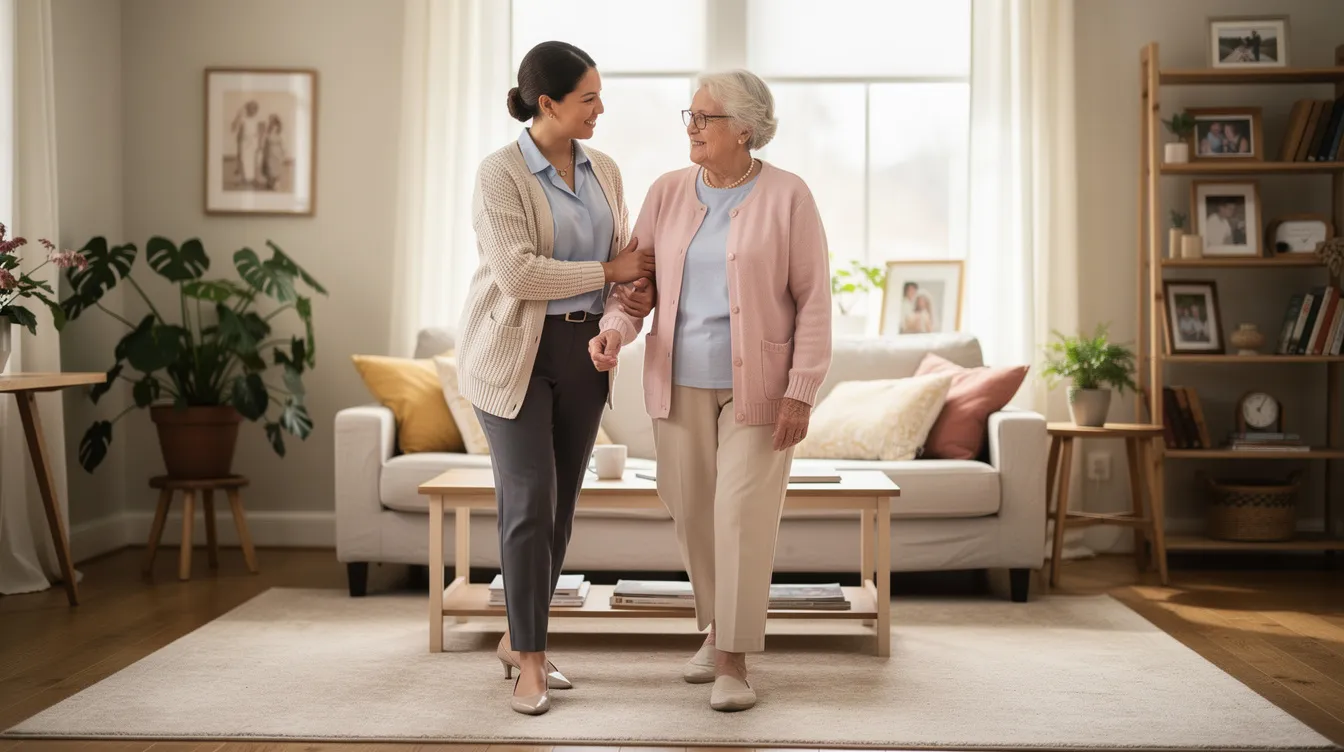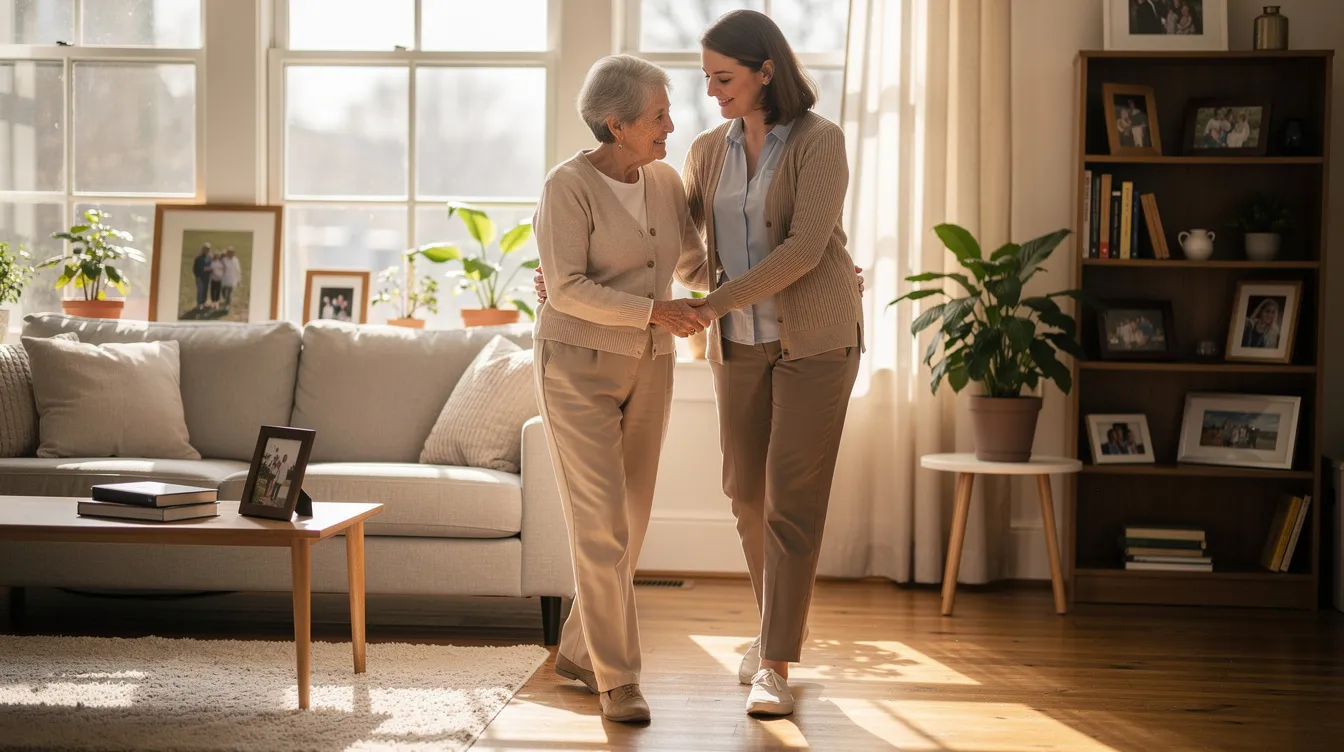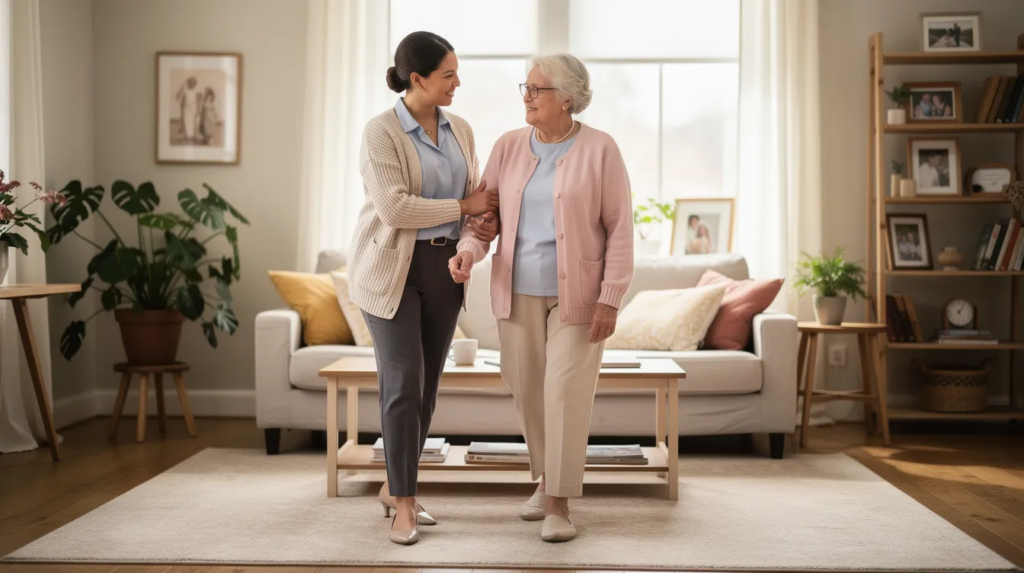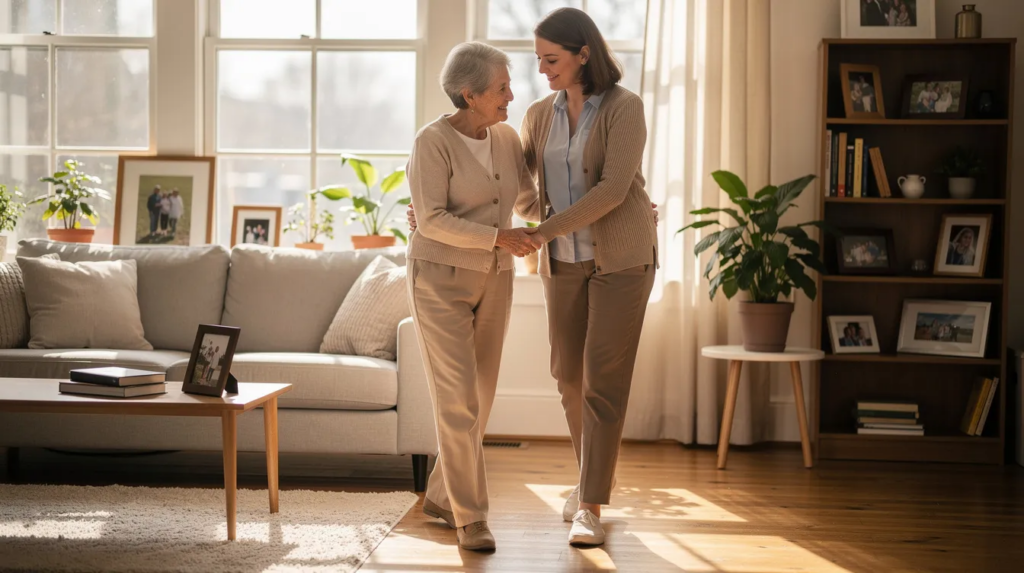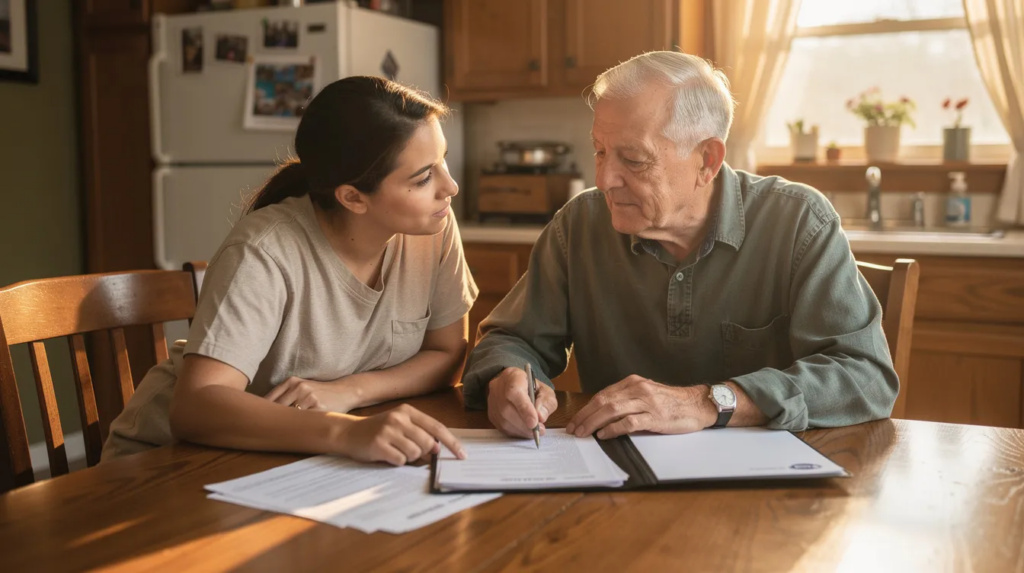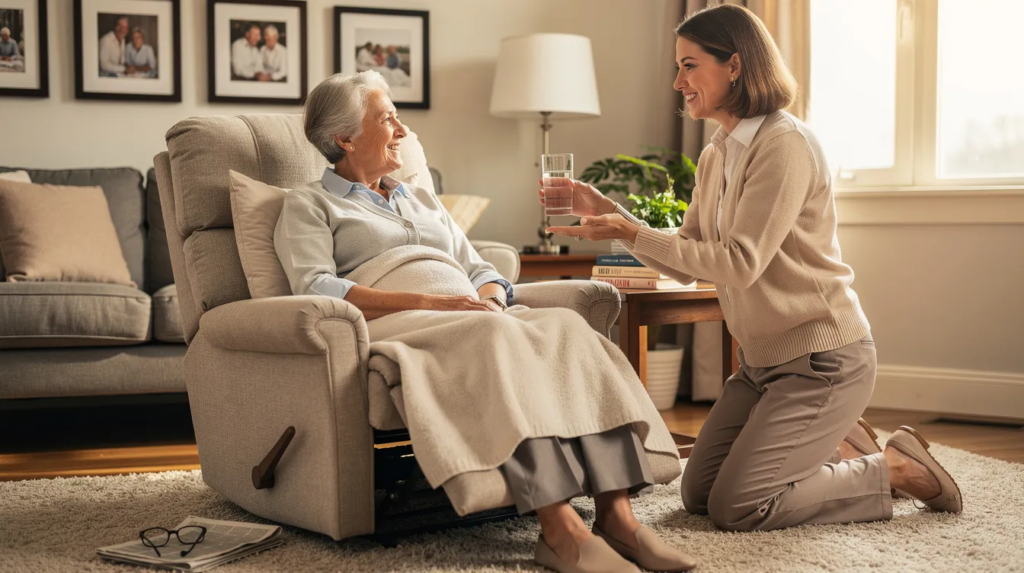
Personal care for seniors at home covers the hands-on, non-medical assistance that helps aging adults manage daily living tasks that have become harder to manage independently: bathing, dressing, toileting, grooming, and moving between rooms. Aging in place means staying at home as you age, and for many older adults, receiving this type of support in their own home is often one of the first options families consider before assisted living or memory care.
BlueDot Cares provides personal care services to aging adults and family caregivers across Charlotte and the Triangle region of North Carolina, including Raleigh, Durham, Chapel Hill, Cary, Apex, and surrounding communities. This guide will help family members understand what personal care involves, how it differs from other services, and when to bring in Care Professionals as family caregiving responsibilities grow.
Personal care routines focus on the daily tasks that support physical well-being, dignity, and independence for aging adults. The core benefits include:
-
Dignity: assistance happens on the aging adult’s terms, in a familiar setting with meaningful memories
-
Safety: Care Professionals provide hands-on assistance during bathing, transfers, and movement around the home
-
Independence: targeted help with specific tasks lets aging adults maintain control over the rest of their day
Understanding Personal Care vs. Other Home Care Services
Personal care means direct, hands-on help with Activities of Daily Living (ADLs): bathing, dressing, grooming, toileting, continence management, transferring (bed to chair, chair to toilet), and eating. In North Carolina, Medicaid’s Personal Care Services program requires a qualifying medical condition, disability, or cognitive impairment, along with unmet needs in at least three of five ADLs, or two ADLs where one requires extensive or full assistance, determined through an independent assessment.
These categories are distinct:
-
Personal care: a personal care aide helps a senior shower safely three mornings a week, assists with dressing, and provides toileting support. Non-medical services like these do not require a physician’s order.
-
Companion care: social interaction and emotional support, errands, light housekeeping, meal preparation, and recreational activities. Companion care provides social connection without hands-on ADL help.
-
Home health care: licensed professionals delivering skilled care, including nursing, wound care, IV administration, and physical therapy ordered by a physician. Medicare covers limited skilled home care services only and does not pay for ongoing custodial personal care.
BlueDot Cares provides non-medical in-home care services, including personal care, companion care, dementia care, respite care, and overnight and 24-hour home care. The company does not replace home health nurses or occupational therapists but works alongside them.
Key Personal Care Tasks for Seniors at Home
-
Bathing and shower safety: a shower chair and grab bars support safer bathing. Care Professionals can help with showers several times a week, adjusting water temperature and providing steady support during transfers.
-
Dressing and grooming: adaptive clothing can make dressing easier for seniors with mobility issues, and caregivers help with buttons, zippers, shoes, and hair styling based on preference.
-
Toileting and incontinence care: discreet, dignified assistance preserves a senior’s comfort, following consistent routines and using protective garments when needed.
-
Oral hygiene and skincare: regular brushing and flossing help protect against gum disease, and gentle moisturizing after bathing addresses skin that becomes thinner and drier with age.
-
Safe transfers: Care Professionals use safe transfer techniques and proper body mechanics when moving a senior from bed to wheelchair or toilet.
-
Medication reminders: prompting a senior to take medication on schedule, using pill organizers, is a core part of daily support. Care Professionals provide reminders, not medication management.
-
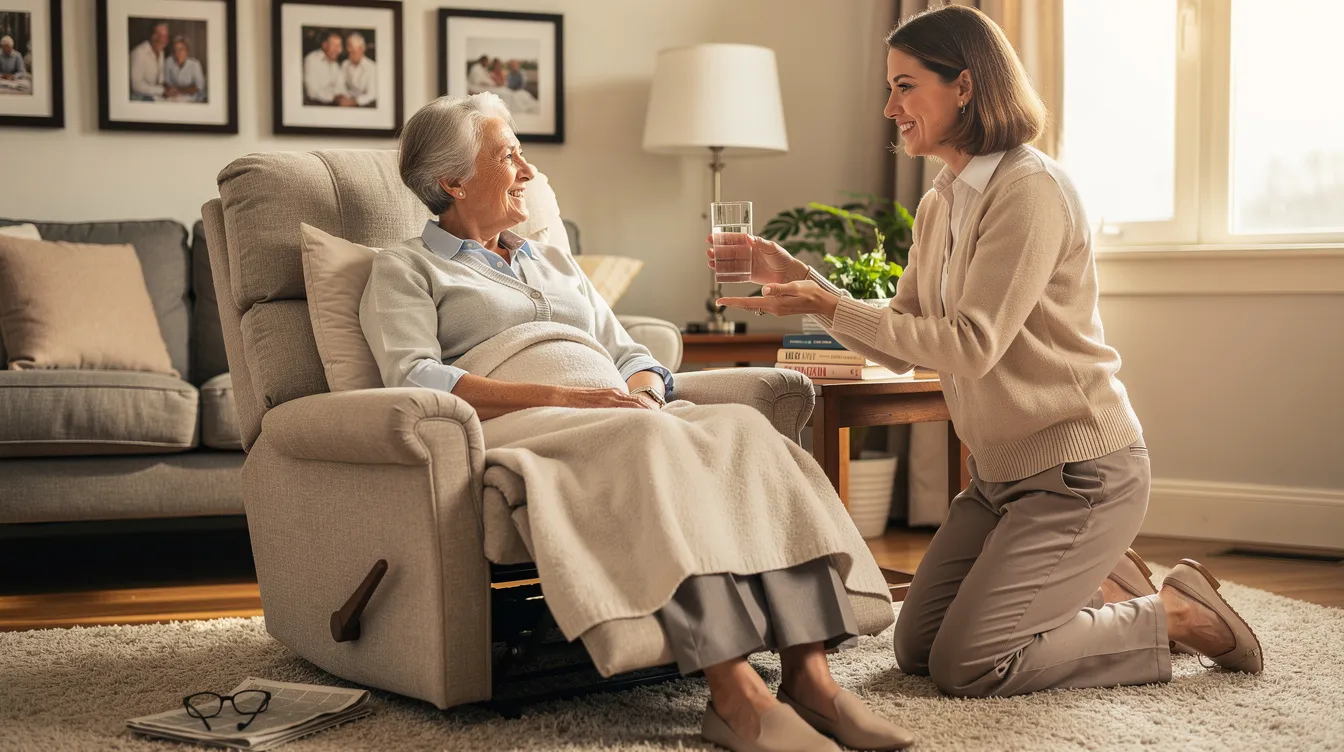
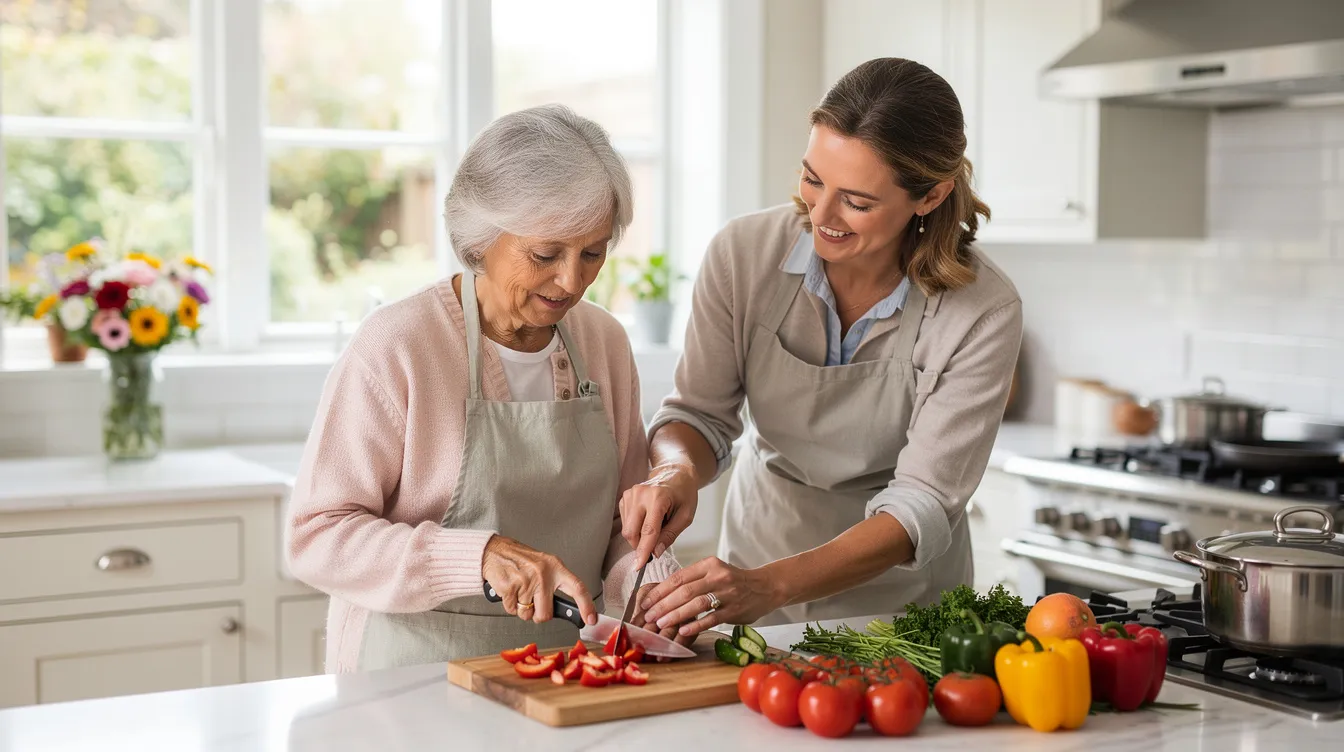
Meal preparation, hydration, and mobility: nutrient-dense meals and regular hydration matter more as thirst cues decline with age, and encouraging light activity, even brief walks or seated exercises, supports mobility and safety at home.
Dementia Care and Personal Care: Supporting Seniors with Memory Loss
Dementia care requires specialized training for caregivers because the way personal care is delivered changes with cognitive decline.
-
Routine and predictability: bathing at the same time each day, using the same towels, and following the same sequence of steps can make personal care feel more familiar and less disorienting for seniors with cognitive decline.
-
Safety during ADLs: door alarms near bathrooms can alert family members or caregivers to nighttime movement, while secured cleaning products and supervision near stairs address other everyday hazards.
-
Trained dementia caregivers: care providers who understand redirection techniques can help ease moments of resistance, offering a warm washcloth first before gradually transitioning a reluctant parent to the shower, instead of insisting.
-
Coaching for family members: Care Professionals can model communication strategies, short sentences, one instruction at a time, a calm tone, that support both the senior and the family caregiver during personal care.
Home Safety and Fall Prevention During Personal Care
Falls remain the leading cause of both fatal and nonfatal injuries among North Carolinians age 65 and older. In 2025, unintentional falls caused an estimated 1,826 deaths, 24,822 hospitalizations, and 164,579 emergency department visits among older adults statewide, according to the NC Division of Public Health’s Injury and Violence Prevention Branch. Home modifications and safety-focused personal care routines are part of how families and Care Professionals work to address these everyday risks.
-
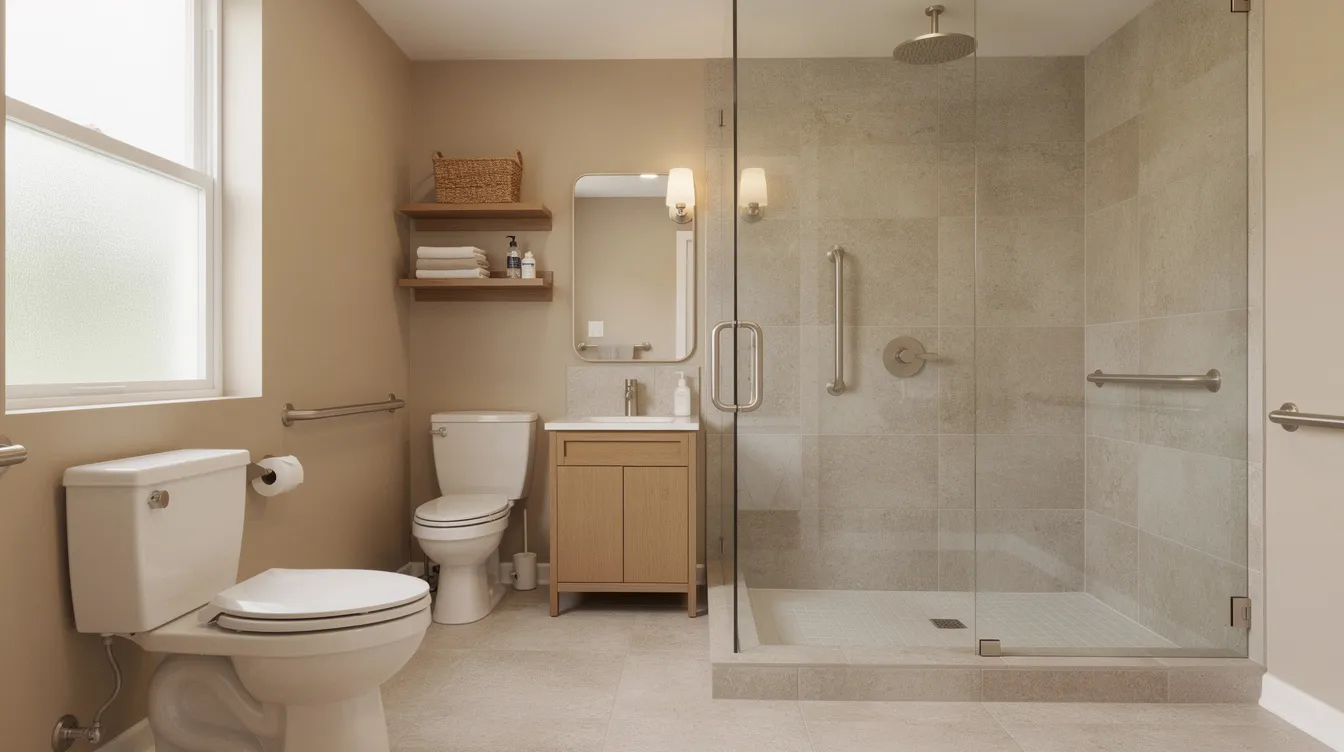
Bathroom upgrades: grab bars, raised toilet seats, shower chairs, and non-slip flooring address the highest-risk room for falls.
-
Pathway clearing and lighting: throw rugs, loose cords, and dim hallways or staircases are common household risks a caregiver checks for during every visit.
-
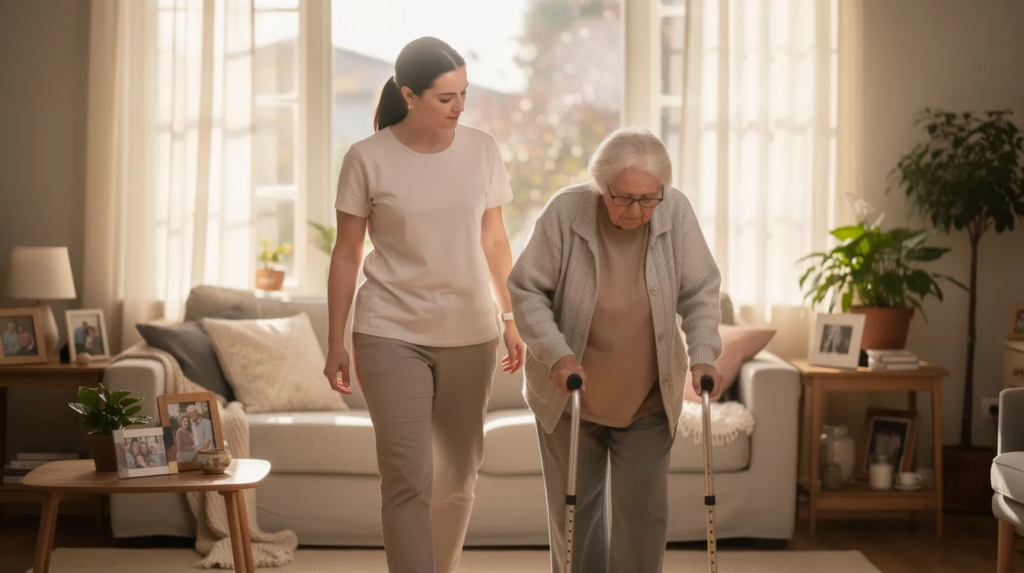
Mobility aids: walkers, canes, and wheelchairs, combined with safe transfer techniques, support safer movement for both the senior and the family caregiver.
-
Regular home safety reviews: a home care provider’s first visit often includes a walkthrough to identify loose stair rails, missing grab bars, and furniture placement that blocks safe movement.
Family Caregivers: Balancing Love, Limits, and Caregiver Burnout
Many family caregivers across North Carolina manage hands-on personal care tasks like bathing, dressing, and toileting for a parent or spouse, often for years at a stretch. That kind of sustained, hands-on responsibility carries real consequences for physical health and emotional well-being.
-
Signs of caregiver burnout: chronic exhaustion, irritability, disrupted sleep, resentment toward the caregiving role, and declining health.
-
Protecting relationships: personal care responsibilities can change the dynamic between a parent and adult child, particularly when bathing or toileting is involved. Sharing personal care with a home care agency lets family members return to being family.
-
Respite care: respite care provides temporary relief for family caregivers. Options range from a few hours a week to overnight care or short-term coverage after hospitalizations. Medicaid may fund respite care for eligible family caregivers.
-
Training and support: caregiver training classes improve confidence and safety in care tasks. Support groups help caregivers share experiences and reduce isolation. Community resources can help reduce caregiver burden by connecting families with practical help and specialized support.
Emotional Support and Preserving Dignity at Home
Personal care can feel intrusive for seniors, particularly with toileting and incontinence. Many older adults prefer to handle these tasks alone, and accepting help requires trust. Care providers build that trust by asking permission before each task, explaining steps, and honoring choices about clothing, schedule, and grooming.
Consistency matters. When the same caregiver arrives each week, a senior can ask to have her hair styled the way she likes it, or keep a familiar bathing routine. That kind of reliability supports a greater sense of calm, especially for aging adults with dementia. Conversation woven into personal care, listening to life stories, discussing the day’s plans, gives the visit a personal dimension beyond the tasks themselves.
Using Community Resources and Health Services Alongside Personal Care
Personal care at home works best when paired with other health services and community resources available across Charlotte and the Triangle.
-
Senior centers in Wake, Durham, and Mecklenburg counties offer exercise classes, fall prevention programs, and social connection for aging adults who are mobile enough to attend.
-
Area agencies on aging: your local area agency connects families with social workers, meal delivery programs like Meals on Wheels, and caregiver support groups.
-
Health services coordination: personal care aides work alongside primary care physicians, occupational therapists, and hospital discharge planners, so recovery from something like a hip replacement is supported at home as well as in therapy.
-
Caregiver education: dementia education classes and caregiver support groups are available through the Alzheimer’s Association’s regional chapters.

Choosing the Right Home Care Provider in Charlotte or the Triangle
BlueDot Cares’ non-medical personal care pricing is generally in the low-to-mid $30s per hour, depending on shift length, time of day, and level of assistance. Most families pay for home care out of pocket through private pay. Families can hire caregivers through agencies or independently; independent caregivers may be less expensive than agency hires, but agencies handle payroll and taxes for their caregivers and provide substitutes if a caregiver is unavailable.
Funding options beyond private pay:
|
Source |
What It Covers |
|---|---|
|
Medicaid PCS |
A North Carolina Medicaid program that can fund in-home personal care for eligible individuals; BlueDot Cares does not accept Medicaid as a payment source for its own services |
|
Medicare |
Covers skilled care only (nursing, therapy); not ongoing personal care |
|
VA Programs |
Veterans may qualify for VA programs to help fund in-home care |
|
Long-term care insurance |
Policies vary; check for home care benefit riders |
When evaluating a home care agency, ask about:
-
Background checks: home care agencies typically screen employees with background checks, drug testing, and reference verification
-
Training: are caregivers trained in dementia care, safe transfers, and fall prevention?
-
Care plan customization: how does the agency match caregivers to seniors and adjust the care plan as needs change?
-
Communication: how does the agency update family members? Is there a supervisor families can reach when a caregiver calls in sick?
-
Backup coverage and scheduling: can they cover mornings, evenings, weekends? What happens during holidays?
Depending on your family’s situation, requesting a care assessment helps clarify which specific services your parent needs and what your budget allows.
When Personal Care for Seniors at Home May No Longer Be Enough
Home care, even 24-hour home care, has limits. Families should consider a transition when:
-
Frequent hospitalizations suggest medical needs that exceed what non-medical in-home care can address
-
Unsafe wandering or uncontrolled behavioral symptoms of dementia put the senior at risk despite supervision
-
Skilled care (IV medications, complex wound care, continuous monitoring) is required around the clock
-
The cost of full-time home care approaches or exceeds assisted living, with less infrastructure for emergencies
BlueDot Cares’ senior placement services help families in Charlotte, the Triangle, and Cleveland, Ohio evaluate assisted living, memory care, and independent living options at no cost to the family. Moving from home care to a senior living community is a thoughtful next step when safety demands it; it is not a failure.
How BlueDot Cares Can Help Your Family Today
Personal care for seniors at home protects safety, preserves dignity, and gives aging adults the chance to live in the place they know best. For family caregivers across Charlotte and the Triangle, professional home care is proactive support, not a last resort.
-
Request a care assessment to discuss personal care, dementia care, respite care, or overnight care
-
Ask about care plans tailored to your parent’s routine, preferences, and home layout
-
Start with a no-pressure conversation about what a Care Professional’s support could look like for your family
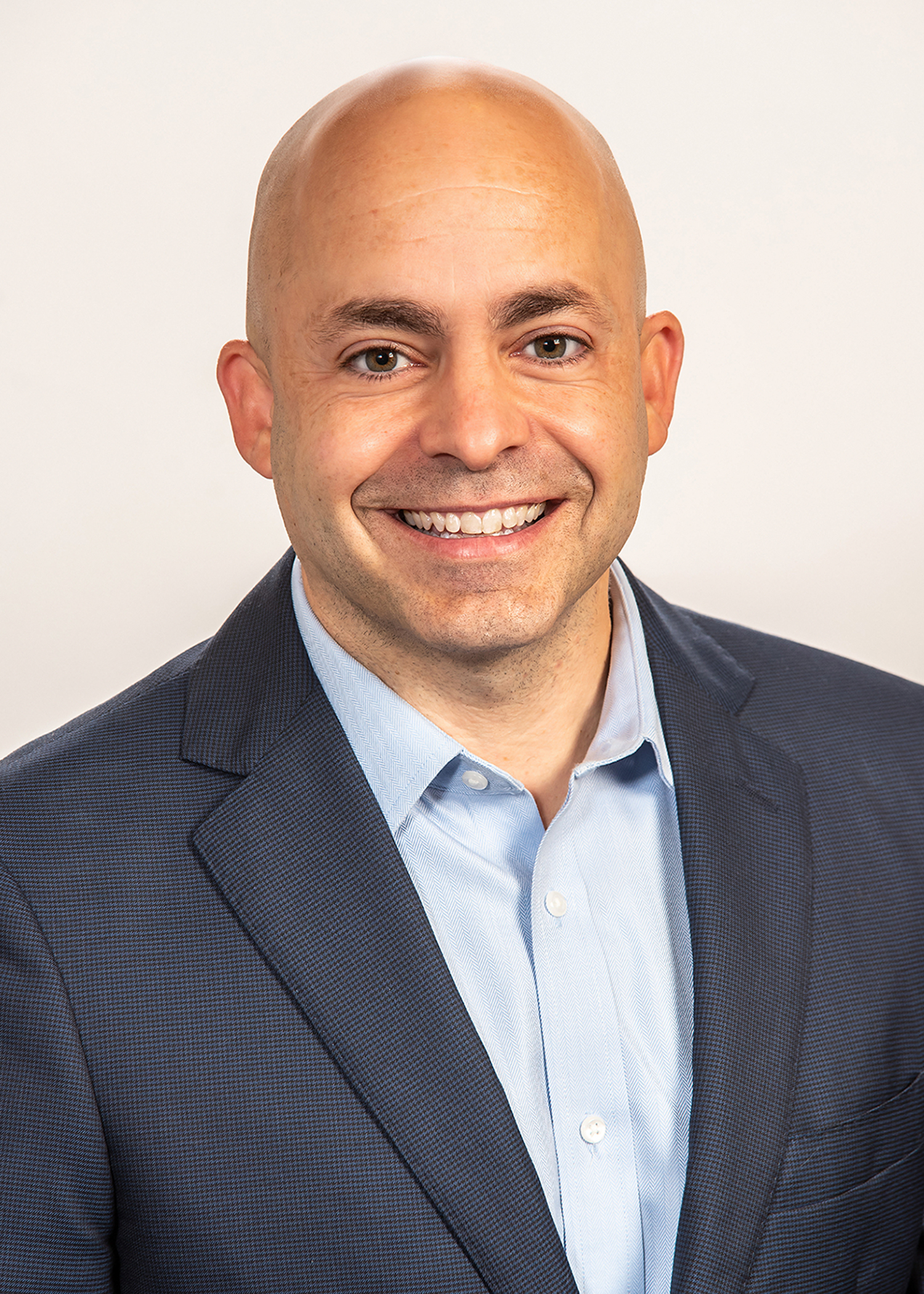
Jimmy Clonaris is Managing Partner at BlueDot Cares, where he oversees operations, caregiver standards, and service delivery for in-home care across the organization. With more than 19 years of experience in healthcare and over a decade with BlueDot, he has been directly involved in building and scaling care programs that support individuals aging at home.
His work focuses on the practical side of care delivery. This includes caregiver training and oversight, care plan consistency, and coordination with families and local healthcare professionals. Jimmy is actively involved in ensuring that care is not only well-structured on paper, but executed reliably in the home.
Over the course of his career, he has worked with thousands of families navigating care decisions, from short-term recovery support to long-term in-home care. His approach is grounded in clear communication, accountability, and building systems that allow caregivers to deliver consistent, high-quality support.
Under his leadership, BlueDot Cares has grown to support tens of thousands of families while maintaining a locally operated, relationship-driven model. He continues to focus on strengthening the team, improving care standards, and ensuring families have a dependable partner when care is needed.