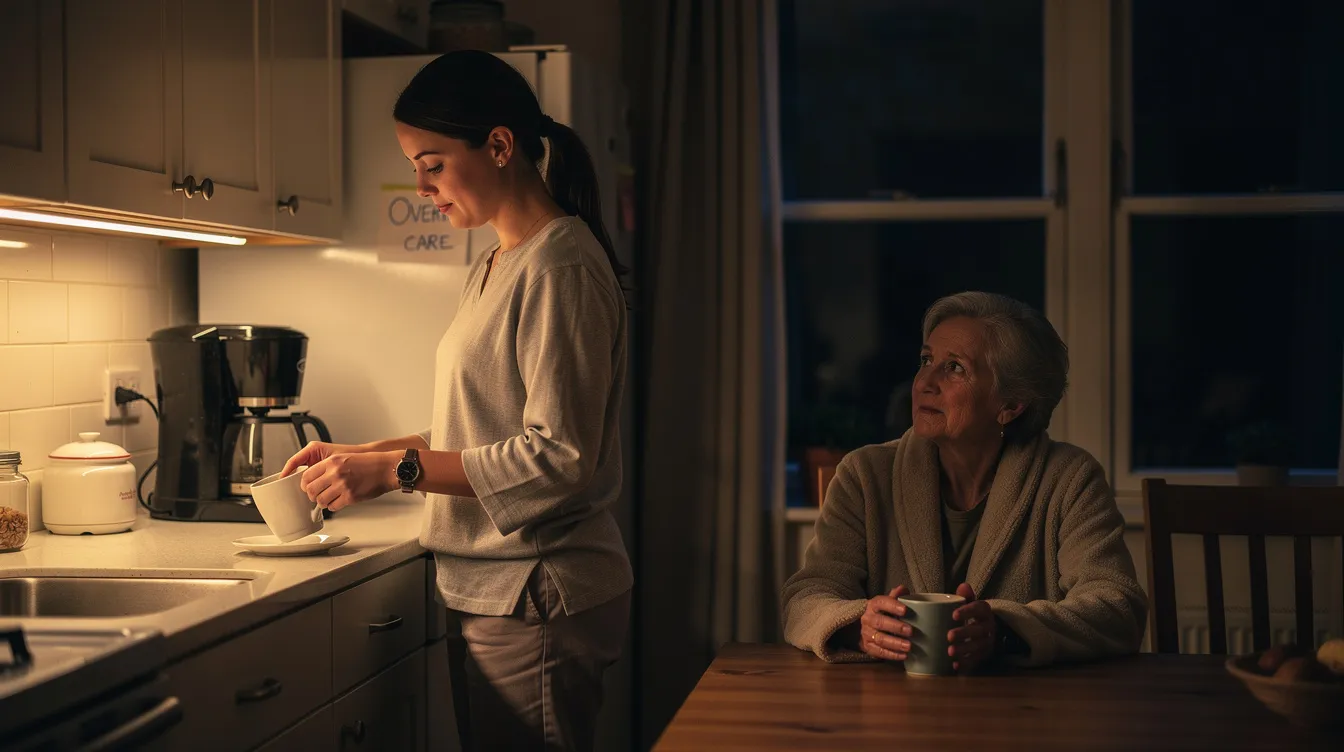
If your parent is living with Alzheimer’s disease or another form of dementia, you may have noticed them pacing, trying door handles, or saying they need to go home while sitting in their own living room. Dementia wandering can raise practical questions for families caring for a parent with memory loss, and understanding why it happens can help you set up a home that feels calm and supports safety. In this guide, you will find why wandering can happen, early warning signs to recognize, how to respond in the moment, home safety tips room by room, a plan for emergencies, and how a Care Professional can support routines for families in Charlotte and the Triangle.
This article is general education, not medical advice. Your parent’s doctor is the right contact for questions about symptoms, sleep, treatment, or medications.
What Dementia Wandering Means
Wandering can include pacing, moving repeatedly through the home, becoming lost, or trying to leave for a place the person believes they need to go. Wandering can occur in people with dementia and may involve disorientation or create safety concerns.
For your parent, wandering often has a reason that makes sense to them: looking for a bathroom, heading to a job from decades ago, or trying to find a childhood home. For example, a parent who worked night shifts for years may get dressed at 3 a.m. to go to work. A parent’s life story, including past jobs and routines, can help explain why they want to leave. Seeing wandering as an attempt to meet a need can help you respond with patience.
Why Wandering Can Happen in Alzheimer’s Disease and Other Dementias
Dementia changes how a person understands time, place, and judgment, so familiar surroundings can feel unfamiliar. Individuals with dementia may forget they are at home, and confusion and disorientation can make a familiar environment feel strange. Changes in depth perception can also make floors, doorways, and hallways look different than they once did. The National Institute on Aging and the Alzheimer’s Association describe several common contributors:
- Memory and orientation changes: Memory loss may lead a parent to forget they already ate, already took a walk, or are already home. They may forget their location and start to look for somewhere familiar.
- Unmet needs: Hunger, thirst, needing the bathroom, pain, or discomfort can prompt movement. Basic needs are worth checking first, and trouble getting comfortable can show up as pacing.
- Stress, confusion, and old routines: Wandering can occur when a person is stressed or confused. Habits from work or parenting can also resurface, such as getting ready to pick up children from school.
- Restlessness and boredom: Long stretches without activity can lead to pacing.
- Changes in surroundings or routine: A hospital stay, a move, noise, unfamiliar people, or even seasonal changes such as daylight saving time can add to confusion. Routine changes can be associated with more wandering behavior in some people.
- Medications and sleep: Some medications, including sleep aids, can increase confusion. Do not stop or change medications without medical guidance.
If you notice a change in behavior, tell your parent’s doctor, since sudden confusion can have other causes. Share changes with your parent’s health care team so they can look at the whole picture.
Early Warning Signs to Recognize
Noticing patterns helps you plan calmly. These warning signs are things families describe:
- Saying “I need to go home,” “I have to get to work,” or “I need to pick up the kids from school” when those are no longer part of the day
- Pacing near doors or windows, or trying door handles
- Getting turned around in a familiar neighborhood or in the house
- Being up and dressed in the middle of the night
- Returning from a short walk much later than expected
A simple notebook can help. Write down when and where the behavior happens, what came before it, and your parent’s mood. Caregivers can observe patterns to identify triggers and needs, and notes can help when you do not have a clear answer about what set off an episode. Share those notes with the doctor and with any Care Professional who supports your parent.
Questions to Ask Your Parent’s Doctor
A visit with your parent’s doctor is a good place to bring what you have noticed. Questions that may help:
- Could a medication, an infection, or another health problem be contributing to the restlessness?
- Are there changes in sleep, vision, or hearing that we should look into?
- What should we do, and whom should we call, if our parent leaves the house unexpectedly?
- Are there local resources or support services we should know about?
Bring your notebook, and ask the doctor to explain any recommendation in plain language.
Responding in the Moment
How you respond can affect how your parent feels. A few approaches commonly suggested by dementia care organizations:
- When it is appropriate to do so, stay with your parent, speak calmly, and gently redirect them toward a familiar or comfortable activity or place
- Acknowledge the feeling behind the words, such as “You want to get home. Let’s sit and have some tea first.”
- Offer a simple activity or snack to shift attention
Arguing or repeatedly correcting can add frustration. Over time, you will learn which approaches help your parent most.
Home Safety Tips
Home safety works best when it quietly supports your parent without making the house feel locked down. The goal is to create a dementia safe environment where your parent can move safely and still feel at home. Environmental changes can support safety and make it easier for families to notice or respond to wandering. No single step is a guarantee of preventing wandering, and a layered approach with several safety tips working together is more realistic.
Doors and entrances
- Place door chimes or simple alarms on exterior doors so you know when a door opens
- Some families connect door alerts to a home security system
- Some families use child safety locks or latches placed out of the line of sight; keep emergency exit access in mind, and ask the fire department or a home safety professional if you are unsure
- Keep entryways well lit and free of clutter
Hallways, rooms, and lighting
- Use motion sensor nightlights between the bed and the bathroom for nighttime visibility
- Remove tripping hazards, such as throw rugs, cords, and excess clutter, and keep walkways clear
- Label key rooms, such as the bathroom, with simple words or pictures at eye level
- Keep car keys and frequently used items in the same place each day
Bathrooms and kitchens
- Install grab bars near the toilet and shower, especially for a parent with balance problems
- Keep medications in a locked cabinet or drawer, and store cleaning supplies and other cleaning products securely
- Consider setting the water heater to a lower temperature if recommended for the household
- Use plates and bowls in contrasting colors to make meals easier to see
- Check that smoke detectors are working regularly
Outdoors
- Secure hazards outside, such as pool access, steps, and gates
- Trim bushes that hide walkways or exits
Walk through the home at your parent’s pace, at day and at night, to see it from their point of view. Our guide to reducing falls in seniors at home has more room-by-room ideas.
Evenings and Nighttime
Restlessness can be more noticeable in the late afternoon and at night. Practical steps include keeping a regular bedtime routine and a calm, quiet evening, encouraging daytime activity and natural light as your parent’s doctor allows, limiting caffeine later in the day, and keeping a nightlight on with the path to the bathroom clear. If sleep problems continue, ask the doctor about causes, including medications.
Supporting Routines and Independence
Safety and dignity go together. A predictable daily routine can give your parent structure and make the day more familiar. Regular meals, short walks, and a calming evening are a good start. Meaningful activities can give your parent something familiar and purposeful to do during the day, such as folding towels, watering plants, looking through photo albums, or listening to music.
Involve your parent in small choices, such as which route to take on a walk or which chair to sit in. Familiar places and objects, such as family photos, can make the environment more recognizable. Daily life can include familiar tasks, and a Care Professional can offer assistance with them.
For more on daily routines and communication, see our guide to caring for someone with dementia. If you are also wondering about the cause of your parent’s symptoms, our article on what to do if a parent has dementia explains where to start.

Planning Ahead for Emergencies
Emergency plans should be prepared in case a wandering incident happens. A few preparations are practical to have on hand:
- A recent photo of your parent
- Identification, such as a wallet card, a clothing label, or a medical ID bracelet with a family contact number. Medical identification can provide important information if someone with dementia goes missing.
- A short list of phone numbers for neighbors, friends, and relatives
- A plan for who to call if your parent cannot be found
If your parent cannot be found, begin searching immediately. If they are not found within 15 minutes, call 911 and tell authorities that the missing person has dementia.
Some families let trusted neighbors and nearby friends know that their parent may walk alone, so they can call if they see your parent outside. Share a photo and a phone number, and respect your parent’s privacy. Some families also look into location devices or smartphone location sharing. These tools support supervision and do not replace it. Ask a local Alzheimer’s Association chapter or other dementia-support resource about available options.
The Alzheimer’s Association 24/7 Helpline at 800-272-3900 can also talk through safety questions at any time of day.
Alzheimer’s Association and Other Resources for Families
Local resources, such as your Area Agency on Aging, can point you to programs in your community. Our dementia caregiver support groups page lists additional ways family caregivers can connect with support.
How a Care Professional Can Help at Home
BlueDot Cares provides non-medical in-home care for aging adults in Charlotte and the Triangle. A Care Professional can offer companionship, support daily routines, and accompany your parent on walks or to appointments. Services include dementia and Alzheimer’s support, companion care, personal care, respite care, and overnight and 24-hour care. Our Care Professionals support, structure, and accompany aging adults, and non-medical care does not replace your parent’s medical team.
When the Plan May Need to Change
Needs change over time as the disease progresses. If supervision at home is becoming harder to manage, a family may reconsider the amount or type of non-medical support being used, including overnight or 24-hour care, or explore a community setting. BlueDot Cares offers no-cost senior placement guidance in Charlotte and the Triangle for families comparing assisted living, memory care, and independent living communities.
Care arrangements may need to change as needs and circumstances change. We welcome a conversation about your parent’s routines and the support that may fit.

Jimmy Clonaris is Managing Partner at BlueDot Cares, where he oversees operations, caregiver standards, and service delivery for in-home care across the organization. With more than 19 years of experience in healthcare and over a decade with BlueDot, he has been directly involved in building and scaling care programs that support individuals aging at home.
His work focuses on the practical side of care delivery. This includes caregiver training and oversight, care plan consistency, and coordination with families and local healthcare professionals. Jimmy is actively involved in ensuring that care is not only well-structured on paper, but executed reliably in the home.
Over the course of his career, he has worked with thousands of families navigating care decisions, from short-term recovery support to long-term in-home care. His approach is grounded in clear communication, accountability, and building systems that allow caregivers to deliver consistent, high-quality support.
Under his leadership, BlueDot Cares has grown to support tens of thousands of families while maintaining a locally operated, relationship-driven model. He continues to focus on strengthening the team, improving care standards, and ensuring families have a dependable partner when care is needed.