When a loved one needs help at home, families in Charlotte and the Triangle often hear the terms “home health” and “home care” used interchangeably. They are not the same thing. Understanding home health vs home care can save you time, money, and frustration when making decisions about your family’s next step.
Home Health vs. Home Care: The Quick Difference
Home health care provides medical services at home, prescribed by a doctor after a hospital stay, surgery, or serious illness. Home care offers non-medical support for daily activities, helping older adults stay safely and comfortably in their own homes for months or years. Both play important roles in the broader health care and home support landscape, but they serve different purposes.
Here is a simple side-by-side comparison:
-
Who provides care: Home health is delivered by licensed medical professionals such as nurses, physical therapists, and speech therapy specialists. Home care is typically provided by trained caregivers and home care aides who assist with personal care and companionship.
-
Visit length: Home health visits are usually brief (30–60 minutes) and focused on skilled care. Home care can range from a few hours to extensive daily assistance, including overnight and 24-hour shifts.
-
How it’s paid: Home health care costs are typically covered by insurance, including Medicare, Medicaid, and Medicare Advantage plans. Non-medical home care is usually paid out of pocket through private pay, long-term care insurance, Medicaid waivers, or VA benefits.
In Charlotte and the Triangle (Raleigh–Durham–Chapel Hill), many families use both types of care together. BlueDot Cares provides non-medical home care services that often work alongside separate medical home health care agencies to ensure every need is addressed.
What Is Home Health Care?
Home health care is physician-ordered, short-term medical care delivered in the home. It is part of the broader health care system and is designed for patients recovering from illness or surgery, managing chronic conditions, or stabilizing after a fall or hospitalization. Home health care is typically short-term during recovery or treatment.
Home health services include skilled nursing such as wound care, injections, IV therapy, and pain management. Physical therapists and occupational therapists help patients regain strength and mobility. Speech therapy addresses swallowing or communication difficulties. Medication management, medication administration, and disease education (for conditions like heart failure, COPD, or diabetes) are also common. Home health care may include education on managing medical treatments at home so many patients can build confidence between visits.
Home health care requires a physician’s order, and services must be medically necessary. Patients must be certified homebound to qualify, and a doctor must recertify need every 60 days for continued coverage. Home health care is delivered intermittently based on a medical care plan, not around the clock. Medicare covers home health care if prescribed by a doctor, and Medicare may cover up to 100% of home health care costs under qualifying conditions. Other common payers in North Carolina include Medicaid, VA home health benefits, and private insurance.
Home health professionals and home health aides provide services that are clinical in nature. BlueDot Cares does not provide medical home health but frequently supports families when skilled visits leave gaps in daily living assistance.
What Is Home Care (Non-Medical In-Home Care)?
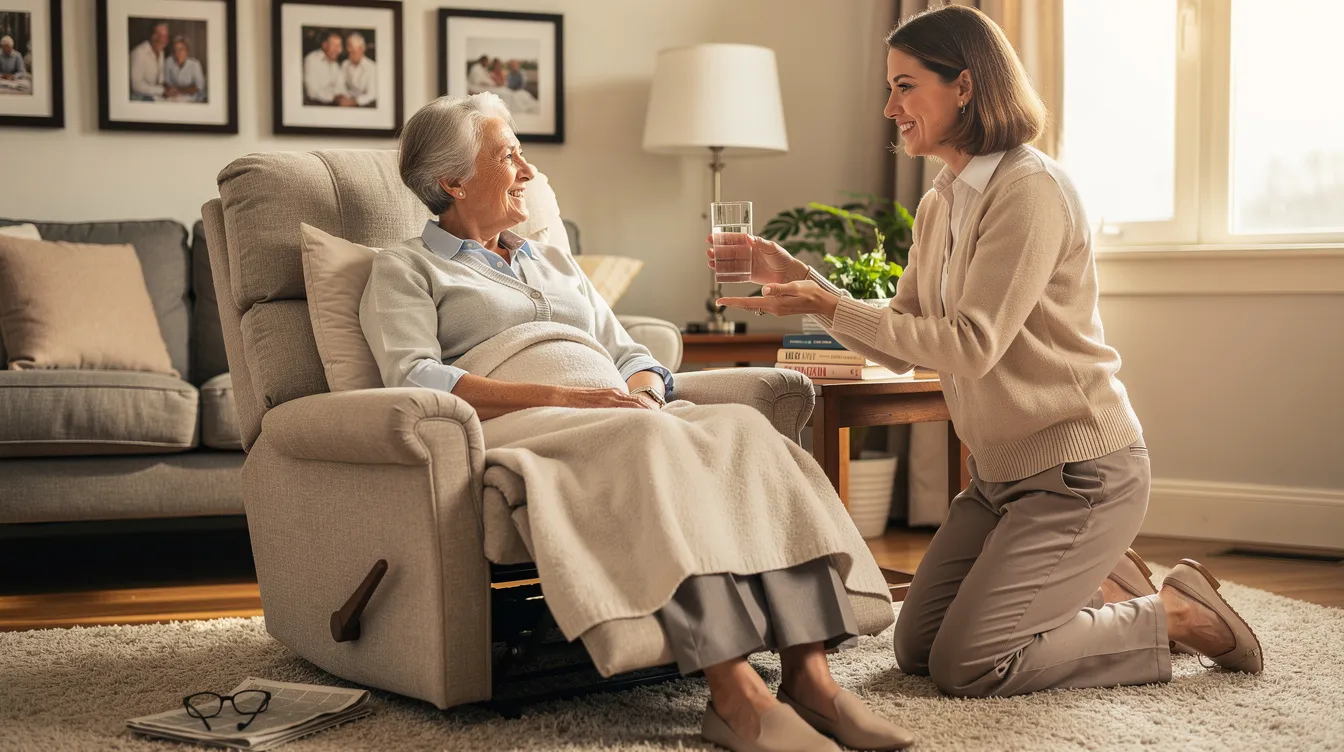
Home care is non-medical support with daily living, sometimes called personal care, companion care, or custodial care. The goal is to help older adults in Charlotte and the Triangle age in place safely and comfortably at home for as long as needed. Home care services do not require a medical referral, and home care can continue as long as needed by the patient.
BlueDot Cares provides services including bathing, dressing, grooming, toileting, safe transfers, mobility assistance, meal preparation, medication reminders, light housekeeping, transportation to medical appointments and errands, companionship, and specialized dementia and Alzheimer’s support. Home care services assist with daily activities like bathing and dressing, and companionship is a vital aspect of non-medical home care that helps reduce isolation.
Caregivers are not performing skilled nursing tasks but are trained to support daily living, monitor changes, and report observations to family members. Home care is useful for individuals needing help with everyday tasks, and it provides support for families that can alleviate caregiver burnout.
Scheduling is flexible. Some families need a few hours of companion care each week; others need daily visits, overnight care, or 24-hour home care for someone who cannot be safely left alone. Common payment sources include private pay, long-term care insurance, Medicaid waiver programs where applicable, and VA Aid and Attendance benefits for eligible veterans.
BlueDot Cares is a local home care agency serving Charlotte and the Triangle with personalized, flexible care plans tailored to each family’s situation.
Key Differences Between Home Health and Home Care
Understanding the key differences between home health and home care helps families choose the right combination of services. While home health care services can overlap with personal care, they have distinct purposes. Choosing the right care type depends on the individual’s medical and daily living needs.
-
Type of care: Home health addresses medical needs through clinical interventions. Home care focuses on daily comfort and safe living through non-medical assistance.
-
Who provides it: Home health relies on skilled professionals: licensed nurses, therapists, and medical professionals. Home care uses trained caregivers and home care aides who provide services centered on daily activities and companionship.
-
When it’s used: Families typically receive home health care after a hospitalization, new diagnosis, or serious change in health conditions. Home care helps with ongoing routines, safety, and quality of life over the long term.
-
Duration: Home health usually lasts weeks to a few months with recertifications. Home care continues as long as a family needs and can afford it.
-
Coverage: Medicare and insurance cover home health when medically necessary. Home care is typically paid out of pocket or through Medicaid, long-term care insurance, or VA programs. Medicare generally does not cover custodial or personal care, which means homemaker services and daily living assistance fall outside its scope.
Consider this scenario: An 82-year-old woman in Raleigh fractures her hip. After surgery, she begins to receive home health care: physical therapy and skilled nursing visits covered by Medicare. Meanwhile, BlueDot Cares provides help with bathing, dressing, meal prep, and supervision between those brief medical visits. Both services work together, and the differences between home health and home care become complementary rather than competing.
A common misconception is that Medicare will pay for someone to stay with Mom all day. That is usually not true. Medicare’s home health benefit covers intermittent skilled care, not continuous personal assistance. That is exactly where non-medical home care fills the gap.
Types of Non-Medical Home Care: Personal Care vs. Companion Care
Within home care services, families often choose between or combine personal care and companion care depending on their loved one’s situation.
Personal care involves hands-on assistance: bathing, dressing, grooming, toileting, incontinence care, safe transfers, and mobility help. It is especially important for seniors with arthritis, stroke history, or dementia who face fall risks or cannot manage hygiene independently.
Companion care focuses on social engagement, conversation, transportation to appointments and errands, help with mail and bills, meal prep, light housekeeping, and emotional support. Both types of care support daily living, but personal care is more intimate and often needed when family members can no longer safely provide hands-on assistance.
BlueDot Cares customizes care plans across Charlotte and Triangle communities. A socially isolated senior in Cary may benefit from companionship-focused visits, while a client with dementia in Huntersville may need more structured supervision and personal care. Common use cases include a spouse needing respite a few afternoons a week, or adult children in Durham arranging overnight safety support for a parent prone to wandering.

Who Qualifies for Home Health vs. Who Benefits Most from Home Care
Eligibility requirements for home health care are defined by medical and insurance rules. Home care eligibility is based on need and budget.
To receive home health care, a patient typically needs a doctor’s order following a recent change in health: surgery, a serious illness, or a decline in chronic conditions. They must meet homebound criteria and require skilled care such as wound care or therapy. A physician must recertify the need roughly every 60 days for continued Medicare coverage, and not every patient who leaves a skilled nursing facility will qualify indefinitely.
Any older adult who would be safer or more comfortable with help at home can receive home care. No referral is required. Common triggers include falls, weight loss, loneliness, caregiver burnout, early memory loss, or family living out of town. Medicaid may cover personal care services based on state eligibility in North Carolina through programs like Personal Care Services and Community Alternatives Program waivers.
Signs your loved one may need help include difficulty bathing safely, missed medications, spoiled food in the fridge, unpaid bills, or increased isolation. BlueDot Cares often works with families before a crisis, using home care to prevent hospitalizations and delay or avoid moves to assisted living or memory care.
Paying for Care: Health Care Coverage vs. Home Care Costs
How care is paid for is one of the biggest practical differences between home health and home care.
Medicare, Medicaid, Medicare Advantage plans, and many private insurance plans typically cover medically necessary, doctor-ordered home health care services for eligible patients. Coverage usually includes nursing and therapy visits and sometimes medical equipment, but not round-the-clock medical support. Home health care costs are typically covered by insurance when eligibility requirements are met.
Most non-medical home care is private pay, billed hourly. Costs vary based on location, schedule, and care needs. In the Charlotte and Triangle market, non-medical home care generally falls in the low to mid $30s per hour, depending on complexity, shift pattern, and whether dementia or overnight care is involved. Some families use long-term care insurance, VA Aid and Attendance, or state Medicaid programs to offset expenses, but the majority of home care is paid out of pocket by patients or families.
Families should review existing policies and speak with BlueDot Cares for guidance on applying benefits like long-term care insurance toward home care services. Investing in home care early can reduce hospital readmissions, improve quality of life, and delay the need for higher-cost residential care settings.
How BlueDot Cares Fits Into the Care Continuum in Charlotte & the Triangle
The care continuum moves from independent living at home, to non-medical home care, to medical home health, and eventually, if needed, to assisted living or memory care. Home care helps families navigate this progression on their own terms rather than in response to a crisis.
BlueDot Cares serves as a non-medical home care agency that helps seniors remain safely at home through personal care and companion care. The team supports family caregivers with respite, overnight care, and 24-hour home care and provides specialized dementia and Alzheimer’s care in the home. These services are available throughout Charlotte and across the Triangle, including Raleigh, Durham, Chapel Hill, Cary, Apex, Morrisville, Wake Forest, and surrounding communities.
When home is no longer the safest option, BlueDot Cares also offers no-cost senior placement services in Charlotte, the Triangle, and Cleveland, Ohio, helping families compare assisted living, memory care, and independent living communities based on care needs, budget, and preferred location.
Key takeaways: Home health vs home care is not an either-or decision. Many families benefit from both, and understanding the health vs care distinction helps you advocate for the right medical support and daily living assistance at the right time. If you are unsure which type of care your loved one needs, BlueDot Cares offers a no-obligation consultation to review your family’s needs, budget, and options.


Jimmy Clonaris is Managing Partner at BlueDot Cares, where he oversees operations, caregiver standards, and service delivery for in-home care across the organization. With more than 19 years of experience in healthcare and over a decade with BlueDot, he has been directly involved in building and scaling care programs that support individuals aging at home.
His work focuses on the practical side of care delivery. This includes caregiver training and oversight, care plan consistency, and coordination with families and local healthcare professionals. Jimmy is actively involved in ensuring that care is not only well-structured on paper, but executed reliably in the home.
Over the course of his career, he has worked with thousands of families navigating care decisions, from short-term recovery support to long-term in-home care. His approach is grounded in clear communication, accountability, and building systems that allow caregivers to deliver consistent, high-quality support.
Under his leadership, BlueDot Cares has grown to support tens of thousands of families while maintaining a locally operated, relationship-driven model. He continues to focus on strengthening the team, improving care standards, and ensuring families have a dependable partner when care is needed.