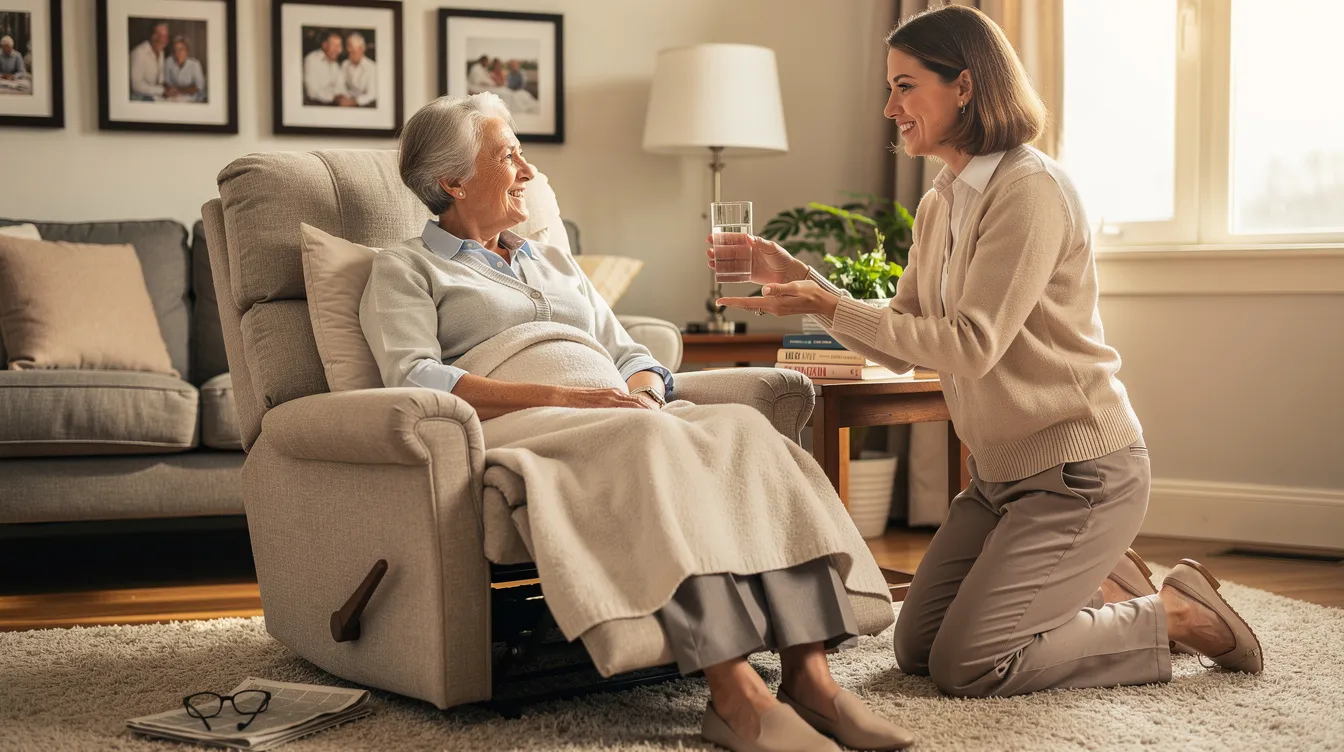
When an aging parent suddenly needs more support, families often have to make decisions quickly. In-home assistance for the elderly gives older adults practical help in their own homes while giving family caregivers a steadier way to manage safety, routines, and stress.
Quick Overview: In-Home Help for Your Loved One
In-home assistance means non-medical support in a person’s home, including help with everyday activities, meals, mobility, supervision, companionship, and household routines. Some families also use meal delivery services to supplement in-home care. Many meal delivery programs accommodate special dietary needs; some local governments offer low-cost meal programs for eligible older adults, and some meal delivery services require a subscription for ongoing deliveries. For seniors in Charlotte and the Triangle, in-home care often allows a loved one to remain safely at home after a fall, hospital stay, dementia diagnosis, or noticeable decline.
BlueDot Cares provides non-medical home care, not skilled nursing, home health, physical therapy, or wound care. Our caregivers focus on daily living, safety, companionship, personal care, respite care, dementia support, overnight care, and 24-hour care, with services customized after an in-home consultation. In-home care is often the preferred first step before considering assisted living, memory care, or a nursing home.

What “In-Home Assistance” Really Means for Older Adults
Non-medical care includes help with activities of daily living and companionship. Activities of daily living include bathing, dressing, grooming, toileting, eating, transferring, and mobility. Instrumental daily tasks include grocery shopping, laundry, transportation, cleaning, medication reminders, meals, and managing the house.
Home health care is different. Home health services are provided by licensed healthcare professionals and may include in-home nursing care or support for chronic conditions under a physician-directed care plan. A home health aide may provide certain health care support under a medical plan.
Families throughout Charlotte and the Triangle often seek help after a fall, unsafe driving, caregiver burnout, or an older adult living alone with missed medications or spoiled food. Goals usually include:
Helping seniors age in place successfully
Helping families manage safety concerns at home
Delaying nursing home placement when possible
Giving family caregivers reliable support
Care management and scheduling are overseen by BlueDot Cares’ local office, not a nationwide call center.
Types of In-Home Care Services Available from BlueDot Cares
BlueDot Cares builds each care program around the older adult’s routines, health conditions, disabilities, family schedule, and preferences. Evaluating care needs is an important step in choosing the right type of in-home assistance.
Core services provided may include:
Service | How it helps |
|---|---|
Personal care | Bathing, grooming, dressing, toileting, hygiene support |
Companion care | Conversation, games, walks, errands, and social interaction |
Meal support | Planning, light cooking, meals, special diets |
Light housekeeping | Laundry, dishes, tidying, safer walkways |
Reminders | Non-clinical medication prompts and reporting concerns |
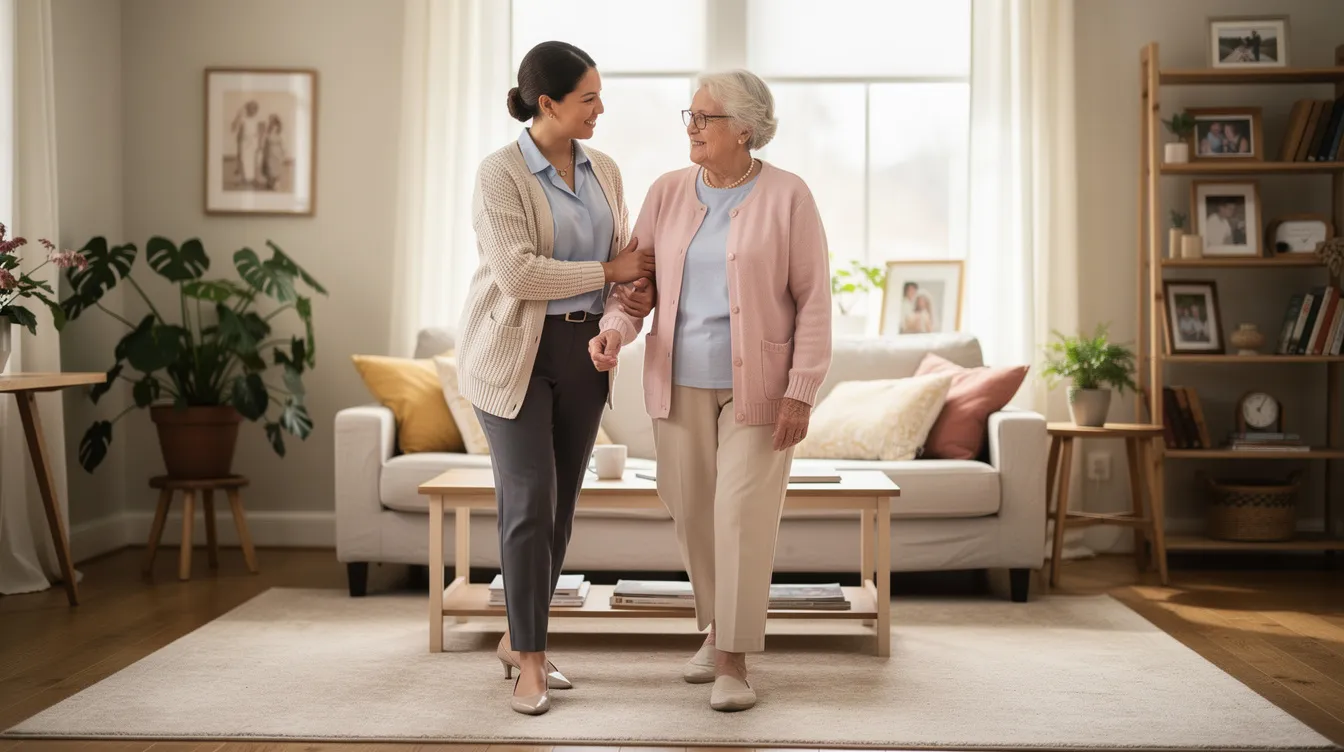
Caregivers can help with getting out of bed, safe transfers, bathroom trips at night, and fall prevention. This support can help seniors remain safer and more comfortable at home.
Respite services provide short-term care for older adults. Care may last from a few hours to several weeks, depending on a family’s needs. Respite care allows family caregivers to take a break while ensuring their loved one continues receiving support and supervision.
Specialized Support: Dementia, Mobility Limits, and Hospital Recovery
In-home care services can support older adults living with dementia and memory-related conditions through specialized care, mobility assistance, and recovery support. BlueDot Cares adapts care through calm routines, memory-stimulating activities, redirection, and supervision to reduce wandering and may recommend emergency medical alert systems for higher-risk clients. These systems are typically worn as electronic monitors that alert personnel, but they need proper setup and regular maintenance and do not replace regular caregiver check-ins.
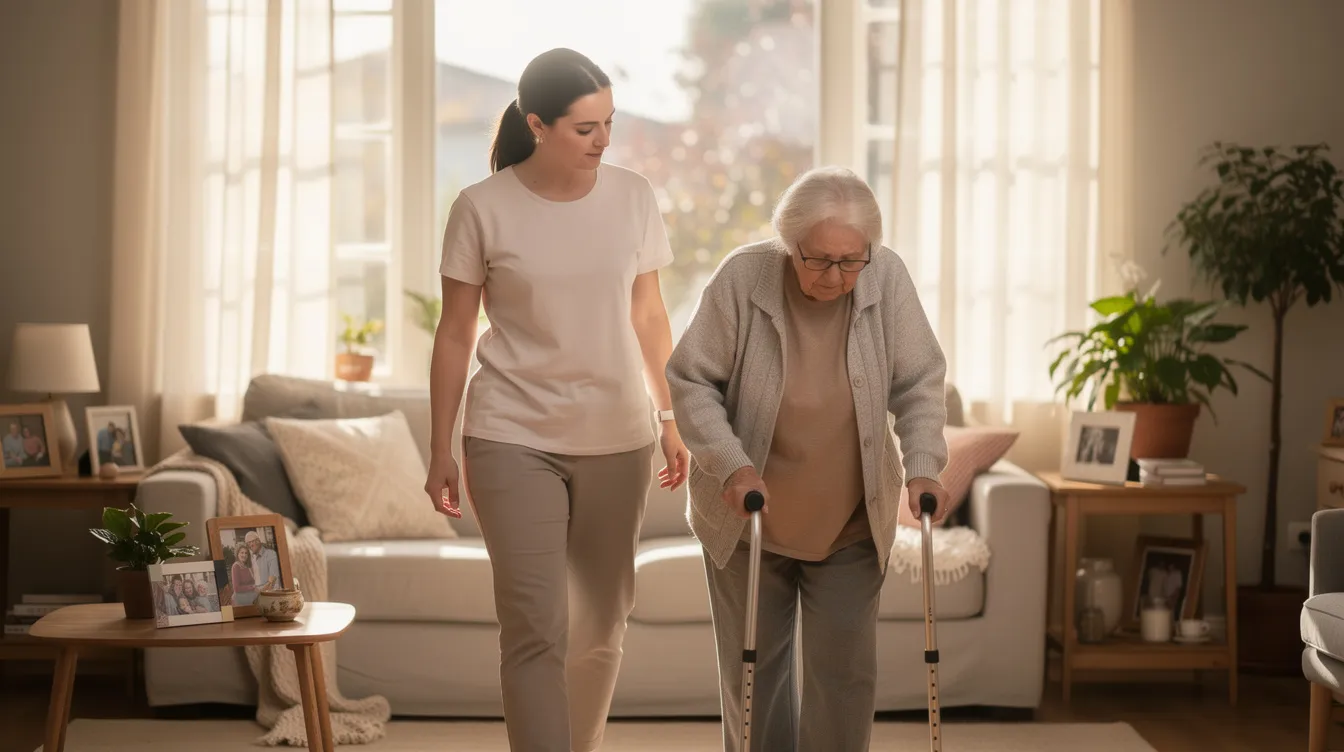
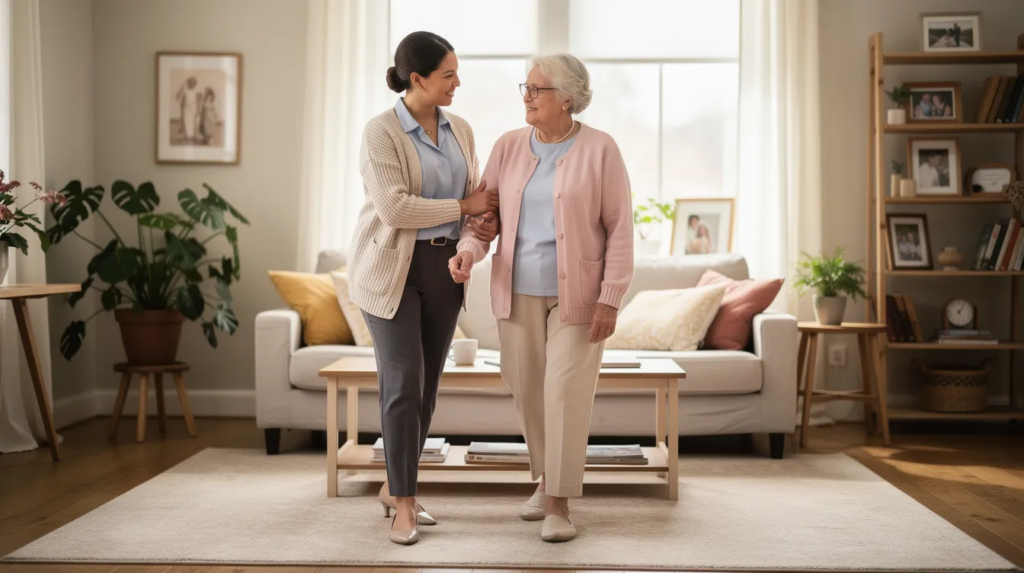
Mobility support may include walker and cane reminders, bathroom escorting, and monitoring for pressure sore risks. After a hospital or rehab stay, caregivers can coordinate with home health nurses or physician-ordered therapists while observing appetite, mood, sleep, cognition, and mobility changes so the family can contact medical providers quickly.
Effective in-home assistance can include companionship, personal care, supervision, and support with daily routines, depending on an individual’s needs. BlueDot Cares’ role is non-medical support and care coordination with licensed providers when a client needs more specialized care.
Who Qualifies for In-Home Assistance and When to Start
There is no strict age cutoff, though many BlueDot Cares clients are older adults who need additional support to remain safe and independent at home. Practical warning signs include missed medications, new dents in the car, spoiled food, frequent falls, unpaid bills, poor hygiene, isolation, or weight loss.
Choosing in-home care involves assessing specific needs and available resources. Eligibility for home care programs is based on assessed need, though BlueDot Cares is private-pay and not a Medicaid waiver or Medicare program. Families commonly pay through savings, retirement income, long-term care insurance, veterans’ benefits, or help from an adult child or other family member.
Home care may no longer be enough when a person needs constant medical oversight, uncontrolled wandering, severe aggression, unsafe transfers, or care better suited to a skilled nursing facility or memory care facility.
Care Management and Care Coordination
A private care management team, often led by licensed nurses or a social worker, assesses needs, builds the care plan, matches caregivers, monitors services provided, and stays in touch with family caregivers while also connecting families with community services for elderly care.
How the BlueDot Cares In-Home Care Process Works
The process begins when you contact BlueDot Cares by phone or form. We discuss location, diagnoses, recent hospitalizations, urgent safety concerns, budget, and preferred schedule.
A care coordinator visits the home with the older adult and key family members when possible. The assessment reviews medical history, routines, home layout, fall risks, transportation needs, meals, medications, and daily challenges. From there, BlueDot Cares creates a care plan covering days, times, tasks, caregiver skills, and safety priorities.
Caregivers are matched by experience, personality, language preferences, dementia experience, and comfort with personal care or companion care. During the first week, families can expect check-ins, schedule adjustments, and a clear way to give feedback. BlueDot Cares prioritizes caregiver consistency so the same trained staff provide care whenever possible.

Scheduling Options: From a Few Hours to 24-Hour Care
Schedules may include morning help with bathing and breakfast, afternoon companionship, evening meals, weekend respite, overnight supervision, or 24-hour home care with rotating caregivers.
Transportation can become one of the first challenges families notice as a loved one ages. Seniors who no longer feel comfortable driving may need assistance getting to medical appointments, grocery stores, community activities, or visits with family and friends. Caregivers can help support these routines by providing transportation assistance and helping older adults remain active and connected to their communities.
Families often start with the highest-stress times of day, then expand the plan as needs increase.
Cost, Payment Options, and Planning Ahead
BlueDot Cares services are private-pay and are not billed through Medicare or standard health insurance. Cost depends on the service area, number of hours, overnight needs, 24-hour coverage, dementia supervision, and hands-on personal care.
Some families use savings, retirement income, long-term care insurance, veterans’ benefits, or shared family contributions. Reviewing policies and seeking advice from a financial planner or elder law attorney can help families arrange care without waiting for a crisis.
Balancing In-Home Care with Community Resources
Structured daytime activities can provide social interaction for seniors. Senior centers, faith communities, and other community resources can complement in-home care.
BlueDot Cares can cover mornings, evenings, weekends, or respite while community resources fill other parts of the week.
Supporting Family Caregivers and Preventing Burnout
Family caregivers often carry physical strain, disrupted sleep, guilt, and constant decision-making. Scheduled respite care for family caregivers lets them rest, work, travel, attend their own appointments, or simply spend better quality time with their loved one.
Regular communication also reduces surprises. BlueDot Cares can update the family about changes in mood, mobility, appetite, or cognition so concerns are addressed earlier.
When Home Care Is No Longer Enough: Placement Support
Sometimes, home care alone cannot provide the level of safety or support a person needs. Rapid dementia progression, wandering, frequent emergencies, unsafe transfers, or the need for around-the-clock skilled medical care may make assisted living, memory care, or a skilled nursing facility a more appropriate option.
BlueDot Cares also offers senior placement services, helping families evaluate assisted living, memory care, independent living, and other senior living communities in the greater Charlotte region and Cleveland, Ohio. The process includes assessing care needs, budget, preferred location, touring communities, comparing options, and planning the transition. Many communities offer transportation services, including scheduled shuttles or ride-sharing options for residents, and many public transit agencies provide discounted fares for older adults. Placement services are advisory and provided at no direct cost to families.
How to Get Started with In-Home Assistance from BlueDot Cares
To begin, contact the BlueDot Cares team serving Charlotte and the Triangle or submit a contact form to request a free in-home consultation. Have the loved one’s location, diagnoses, recent hospital stays, daily challenges, preferred start date, and family contacts ready.
In urgent situations, services may launch quickly after assessment and caregiver matching. Out-of-state adults can join by phone or video and stay involved in decisions.
BlueDot Cares is a local company built to provide services with flexibility, consistency, and practical support, helping older adults maintain independence and continue living at home when appropriate.

Jimmy Clonaris is Managing Partner at BlueDot Cares, where he oversees operations, caregiver standards, and service delivery for in-home care across the organization. With more than 19 years of experience in healthcare and over a decade with BlueDot, he has been directly involved in building and scaling care programs that support individuals aging at home.
His work focuses on the practical side of care delivery. This includes caregiver training and oversight, care plan consistency, and coordination with families and local healthcare professionals. Jimmy is actively involved in ensuring that care is not only well-structured on paper, but executed reliably in the home.
Over the course of his career, he has worked with thousands of families navigating care decisions, from short-term recovery support to long-term in-home care. His approach is grounded in clear communication, accountability, and building systems that allow caregivers to deliver consistent, high-quality support.
Under his leadership, BlueDot Cares has grown to support tens of thousands of families while maintaining a locally operated, relationship-driven model. He continues to focus on strengthening the team, improving care standards, and ensuring families have a dependable partner when care is needed.