New to Senior Caregiving Services? Start Here
If you’re searching for senior caregiving services in Charlotte & the Triangle for a parent or loved one, you’re likely managing a situation that feels urgent and unfamiliar. BlueDot Cares supports families across both regions with non-medical in-home care and senior placement guidance designed to bring clarity to a complex decision.
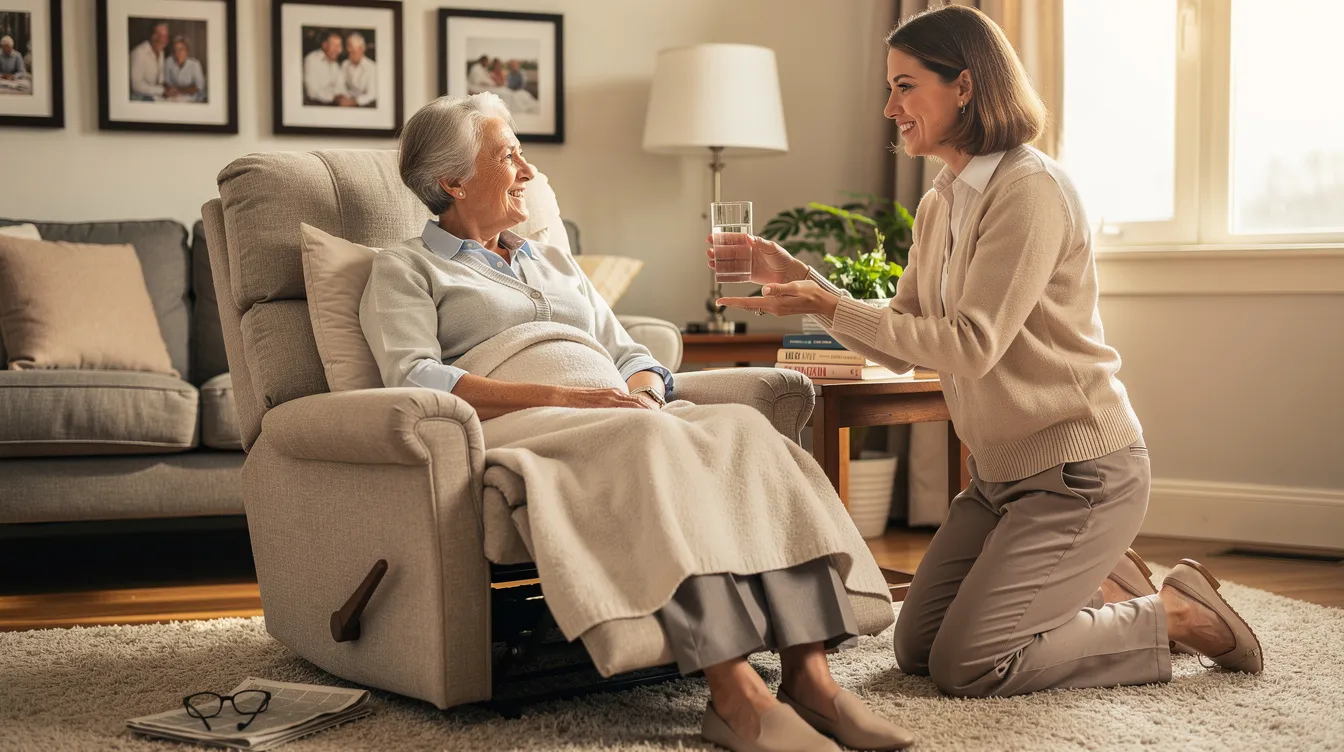
In practical terms, senior caregiving services mean hands-on help with daily living: bathing, dressing, meal preparation, medication reminders, transportation to appointments, light housekeeping, and companionship. These are the tasks that allow older adults to live safely in their own homes rather than moving prematurely to a facility. Most families begin with in-home senior care to help a parent remain at home, then consider assisted living facilities or memory care only if needs change significantly.
A free home care consultation is typically the first step in starting home care services. During this visit in the Charlotte or the Triangle area, we review safety concerns, discuss daily routines, and understand your family’s goals. We then create a customized care plan based on the individual’s needs, home environment, and preferred schedule. Caregivers can often begin providing services within 48 hours of the initial consultation, and in urgent situations, same-day support may be available.
How to get started:
Call BlueDot Cares for a brief phone conversation
Schedule a free in-home consultation
Receive a customized care plan with a schedule, tasks, and communication expectations
Meet your matched caregiver and begin care
In-Home Senior Care Services We Provide
BlueDot Cares is a non-medical home care provider, not a home health agency, serving seniors throughout Charlotte and the Triangle. In-home care services can be categorized into non-medical home care, which assists with daily living activities, and home health care, which provides clinical services prescribed by a physician. We focus on the former: practical, daily support that helps many seniors maintain independence.
Core non-medical services include:
Personal care (bathing, dressing, toileting, grooming)
Mobility assistance and safe transfers
Meal preparation for dietary needs
Light housekeeping and laundry
Errands and transportation to appointments
Medication reminders (no administration)
Safety monitoring and fall prevention
These home care services reduce hospitalizations, improve nutrition, provide social interaction, and decrease caregiver burnout for family members. Care is available days, evenings, weekends, and holidays. Common patterns include a few hours several times weekly, half-day blocks, or full-day support depending on your loved one’s situation.
Services adapt to different circumstances: post-hospital recovery, chronic condition support for arthritis or Parkinson’s, or general frailty related to aging, with flexible home care in Charlotte, NC, designed to adjust as needs change.
Personal Care & Hygiene Support
Personal care services include assistance with activities of daily living such as bathing, dressing, and meal preparation. Our caregivers help with shower assistance using transfer benches, oral care, incontinence management, toileting, grooming, and safe transfers between bed, chair, and bathroom.
Caregivers are trained to preserve dignity, modesty, and privacy during sensitive tasks. This means private setups, clear verbal communication, and respect for personal boundaries—especially during bathing and toileting assistance.
This level of personal care reduces skin breakdowns (affecting 10-20% of homebound seniors), prevents UTIs, and creates safer bathroom routines. Falls cause 3 million emergency visits annually among seniors. Proper mobility assistance and hygiene support can often delay or prevent a move to assisted living facilities in the Charlotte and Triangle areas.
Companion Care & Social Support
Companion Care focuses on non-medical support such as housekeeping, meal preparation, and transportation. It’s non-hands-on care centered on company, conversation, and day-to-day presence.
A typical companion visit might include:
Playing cards or board games
Watching Carolina Panthers games or local news together
Walks in the neighborhood
Helping with email or video calls with family members
Reading aloud or working on puzzles
Professional caregivers often engage seniors in structured social activities and cognitive stimulation exercises. Research shows loneliness elevates dementia risk by 50%. Professional caregivers provide reliable transportation to appointments and social activities, reducing isolation for seniors who no longer drive.
Many families in Charlotte and the Triangle start with companion care, a few hours a week, when a parent is still mostly independent but lonely or unsafe alone all day.
Respite Care for Family Caregivers
Respite care is temporary, short-term in-home care that gives family caregivers time to rest, work, or travel. Hiring professionals for caregiving allows family members to take necessary breaks, reducing the risk of burnout.
Examples include a daughter in Charlotte needing coverage while at work in Uptown, or a son in Raleigh needing weekends off to spend quality time with his own children, who may benefit from structured respite care in Charlotte, NC.
Common respite schedules:
One afternoon per week
Alternating weekends
Coverage during medical appointments or business trips
A few hours daily while you handle work or errands
Introducing professional help allows family members to return to their original roles, reducing caregiver burnout and unresolved tensions. Respite care can be a low-pressure way to try out home care without committing to a long schedule. Adult Day Programs offer daytime supervision and social engagement in a safe environment, allowing primary family caregivers to work or take a break.
Overnight & 24-Hour Care
Overnight care means an awake or on-call caregiver during nighttime hours. 24-hour care involves caregivers working in shifts around the clock, typically 8-12-hour rotations.
Situations where overnight or 24-hour care makes sense:
Fall risk at night
Wandering due to dementia
Frequent bathroom trips
Recent hospitalization
Consider this scenario: a parent is up multiple times nightly, and a spouse needs uninterrupted sleep to function. An awake overnight caregiver allows the spouse to rest while ensuring safe bathroom trips and monitoring.
Agencies often provide backup staff to ensure continuity of care if a caregiver is unavailable. Professional caregivers can offer a reliable care schedule because agencies typically have a bench of trained staff to provide replacements. Families can combine daytime and nighttime shifts to cover only the highest-risk hours if the financial situation is a concern.
Dementia & Alzheimer’s Care at Home
BlueDot Cares provides non-medical Alzheimer’s support in Charlotte, NC, and dementia support for other memory disorders in familiar home environments. Memory Care Units are specialized environments for individuals with Alzheimer’s or dementia, but staying at home in Charlotte or the Triangle neighborhoods can reduce confusion compared to frequent moves between settings.
Dementia-specific support includes:
Redirection and reassurance during confusion
Maintaining consistent routines
Cueing for eating and drinking
Supervision to reduce wandering risk (affecting 60% of Alzheimer’s patients)
Engaging in familiar activities
Caregivers receive training on communication strategies for memory loss and challenging behaviors like repetition, agitation, and sundowning. Practical adjustments include labeling drawers, removing hazards, and simplifying choices.
Some families pair dementia home care with adult day programs or memory clinics. Adult Day Care Services offer safe, structured, social, and health-focused daytime programs for seniors. We can coordinate schedules around these services as part of broader dementia support in Charlotte, NC.

Senior Placement Services When Home Care Is Not Enough
While in-home care is often the first and preferred step, some seniors eventually need assisted living or memory care. When around-the-clock supervision or specialized care becomes necessary, remaining at home may no longer be the safest option.
BlueDot Cares offers no-cost senior placement services (currently focused on Cleveland, Ohio) to help families evaluate assisted living, memory care, and independent living when home care alone cannot meet needs.
Placement support works through an initial call, discussion of medical needs, budget, and preferred neighborhoods, then curated options instead of long online searches. We act as advisors and guides, helping families compare communities, ask informed questions, and plan transitions. Evaluating financial sustainability includes understanding costs that can range significantly for home care or facility-based care, which can reach $5,000–$9,000+ monthly.
Assisted Living & Independent Living Options
Independent Living is for healthy seniors who can manage daily tasks but want a maintenance-free life in a social community. Assisted Living Facilities provide residential care for those needing daily assistance while maintaining some independence.
Assisted Living offers a blend of independence and support, providing 24/7 staff for help with ADLs and medication management. Typical features families ask about include meal plans, transportation, social activities, and help with bathing or dressing.
Continuing Care Retirement Communities (CCRCs) provide campus-based options that offer a spectrum of care as needs change. CCRCs provide all-inclusive communities that offer multiple levels of care in one location.
We help families narrow choices based on budget, care needs, and proximity to adult children’s homes. During tours, pay attention to staffing levels, cleanliness, and resident engagement.
Memory Care Placement for Advanced Dementia
Memory Care consists of highly secure units staffed with specialists trained specifically for seniors with Alzheimer’s or other forms of dementia. These communities provide secure environments, dementia-specific programming, and specialized staff training.
Signs that memory care might be safer than remaining at home include frequent wandering, aggressive behaviors, or unsafe nighttime activity, even with professional caregivers present.
For families with more intensive medical needs, Skilled Nursing Facilities provide the highest level of comprehensive, 24/7 medical care for those with chronic conditions or complex medical needs. Nursing Homes offer intensive 24/7 care for those with chronic or complex medical needs. Hospice Care offers specialized comfort care for individuals with terminal illness, focusing on quality of life rather than curative treatment.
We encourage tours and thorough questions before any commitment.
How to Decide Between Home Care and Senior Living Communities
Assessing daily reality can include observing a loved one’s routine for signs like forgetting tasks or frequent falls. Key factors to consider include safety at home, ability to manage personal care, cognitive status, available family support in Charlotte or the Triangle, and financial resources.
Home care is usually appropriate when:
Your loved one has 1-2 falls yearly
ADLs are manageable with assistance
Mild cognitive issues with family proximity
A little help with daily tasks maintains independence
Consider assisted living or memory care when:
3+ falls occur
Full ADL dependency develops
24/7 supervision becomes necessary
Wandering or safety risks are unmanageable
Aging in place allows seniors to remain in the comfort of their own home, which can lead to increased happiness and a sense of independence. Research indicates that seniors who age in place often recover faster from illness or injury compared to those who move to assisted living facilities.
Many families use a step-up approach: starting with a few hours of home care per week, increasing hours, and only moving to a community if continuous supervision becomes necessary.
What to Expect from a BlueDot Cares Caregiver
Full-service home care agencies typically provide prescreened applicants who have undergone background checks, which can offer peace of mind to families hiring caregivers. When hiring home care providers, it is important to conduct thorough background checks and verify the identity of independent caregivers, as they may not be affiliated with an agency that handles these processes.
To find suitable home care services, it is recommended to seek referrals from family, friends, or healthcare professionals, as personal recommendations can help identify trustworthy providers.
Our recruitment and screening process includes:
Comprehensive background checks
Reference verification
Experience requirements for chronic illness and specialized care
Training in fall prevention, safe transfers, dementia communication, and infection control
We match caregivers to clients based on personality fit, language and cultural preferences, schedule, and specific care tasks. Day one includes caregiver arrival, home orientation, care plan review, and clear channels for family feedback.
Professional caregivers are trained to manage complex medical and physical needs that often overwhelm family members. We emphasize caregiver consistency so seniors see familiar faces rather than frequent changes.
Communication, Supervision, and Accountability
Care plans are documented and updated regularly. Families receive updates through phone calls, notes, or digital tools as applicable.
Supervisory practices include periodic check-ins, unannounced quality visits when appropriate, and ongoing caregiver coaching. Professional caregivers provide an objective perspective, often noticing subtle changes in health or behavior. Professionals can notice subtle health changes that family members might overlook, which can prevent hospital readmissions.
Families can reach the office after hours for urgent schedule changes or concerns. Issues are addressed quickly and transparently.
Costs, Scheduling, and Getting Started
The cost of in-home care varies and is influenced by factors such as the level of care needed, frequency and duration of visits, geographical location, and type of support required. In Charlotte and the Triangle, hourly rates are typically in the low to mid $30s depending on service level and schedule. We review current rates during your consultation.
Medicare and standard health insurance typically do not cover non-medical assistance with activities of daily living, which is a common service provided by home care agencies. Extensive in-home help can become expensive, especially at higher levels of care and for live-in care or 24-hour coverage, making it essential to budget for anticipated expenses.
Common payment sources:
Private pay
Long-term care insurance
Veterans’ benefits (VA Aid & Attendance)
Local programs where applicable
Families pay only for hours scheduled with no long-term contracts, though minimum visit lengths may apply. Checking licensing and reputation involves reviewing licenses, accreditation, and testimonials from other families.
Steps to begin care:
Phone conversation about your situation
In-home assessment in Charlotte or the Triangle
Written care plan and estimate
Caregiver introduction
First visit
We encourage reaching out before a crisis so there’s time to plan calmly—but we can often begin services quickly when urgent situations arise.
Frequently Asked Questions About Senior Caregiving Services
What is the difference between home care and home health? Home care is non-medical assistance with daily activities like bathing, meals, and companionship. Home health involves skilled nursing services like wound care or physical therapy prescribed by a physician and often covered by Medicare.
How many hours per week should we start with? Many families start with 10-20 hours weekly, perhaps a few hours several times per week. Health monitoring services, such as remote patient monitoring and medication reminders, are increasingly being integrated into in-home care to help manage chronic conditions.
Can we change or cancel visits? Yes. Flexible scheduling is standard, with 24/7 notice for most changes. There’s no long-term contract.
What if my parent refuses help? Start gradually with companion care framed as “help around the house.” Many seniors accept assistance more easily when it doesn’t feel medical or intrusive.
Do you serve both Charlotte and the Triangle? Yes. BlueDot Cares provides in-home care throughout both the Charlotte and Triangle markets, with location-specific caregiver matching.
When should we consider assisted living or memory care? When 24-hour supervision becomes necessary, wandering is frequent, or safety risks exceed what home care can manage. We provide advisory support and placement referrals when appropriate.
How do you handle emergencies or caregiver illness? Agencies provide backup staff to ensure continuity of care if a caregiver is unavailable.
Support for Family Caregivers in Charlotte & the Triangle
Taking care of an aging loved one while managing your own life, work, and family is demanding. The stress, role changes, and guilt that many adult children feel are real, and asking for structured help is not a failure. Home care services can provide essential support for seniors, helping them with daily activities and allowing them to live independently while giving you room to breathe.
Practical self-care strategies:
Schedule regular breaks, even short ones
Share responsibilities among siblings and family
Seek local caregiver support groups or counseling
Accept that you deserve rest to provide care sustainably
BlueDot Cares is not only a service provider but also a guide, helping families think through options, plan ahead, and adjust care over time. Our reputation as trusted home care in Charlotte, NC, is built on long-term relationships with families and consistent, compassionate support. Whether you need a few hours of respite, overnight support, or guidance on when assisted living makes sense, we’re here to help you navigate what comes next.
Next steps:
Call BlueDot Cares to discuss your specific situation
Schedule a free, no-obligation consultation
Receive a customized care plan tailored to your family’s needs
There’s no pressure, and the conversation costs nothing. Reach out when you’re ready.

Jimmy Clonaris is Managing Partner at BlueDot Cares, where he oversees operations, caregiver standards, and service delivery for in-home care across the organization. With more than 19 years of experience in healthcare and over a decade with BlueDot, he has been directly involved in building and scaling care programs that support individuals aging at home.
His work focuses on the practical side of care delivery. This includes caregiver training and oversight, care plan consistency, and coordination with families and local healthcare professionals. Jimmy is actively involved in ensuring that care is not only well-structured on paper, but executed reliably in the home.
Over the course of his career, he has worked with thousands of families navigating care decisions, from short-term recovery support to long-term in-home care. His approach is grounded in clear communication, accountability, and building systems that allow caregivers to deliver consistent, high-quality support.
Under his leadership, BlueDot Cares has grown to support tens of thousands of families while maintaining a locally operated, relationship-driven model. He continues to focus on strengthening the team, improving care standards, and ensuring families have a dependable partner when care is needed.