When a parent or spouse needs supervision after dark, understanding the cost of overnight senior care becomes an important part of planning for reliable support. Whether you are in Charlotte, Raleigh, Durham, Chapel Hill, or Cary, the cost depends on the type of care, how many nights per week you need help, and the amount of support required. This guide explains what affects overnight care costs, how to think about a monthly budget, and which payment resources may be available.
Overnight Senior Care Costs at a Glance
BlueDot Cares’ non-medical overnight in-home care pricing is generally in the low-to-mid $30s per hour. Full 24-hour coverage that combines day and night shifts costs more than overnight-only care because it covers more hours of support.
Overnight care can be structured in different ways depending on how much support is needed during the night:
-
Awake overnight care: the Care Professional remains awake and available throughout the shift, providing one-on-one attention
-
24-hour care: separate day and night coverage provides support across the full 24-hour period
Overnight care generally costs less than full 24-hour coverage because it covers fewer hours. BlueDot Cares can discuss the level of overnight support your parent needs and provide pricing for that care.
What Is Overnight Senior Care and When Is It Needed?
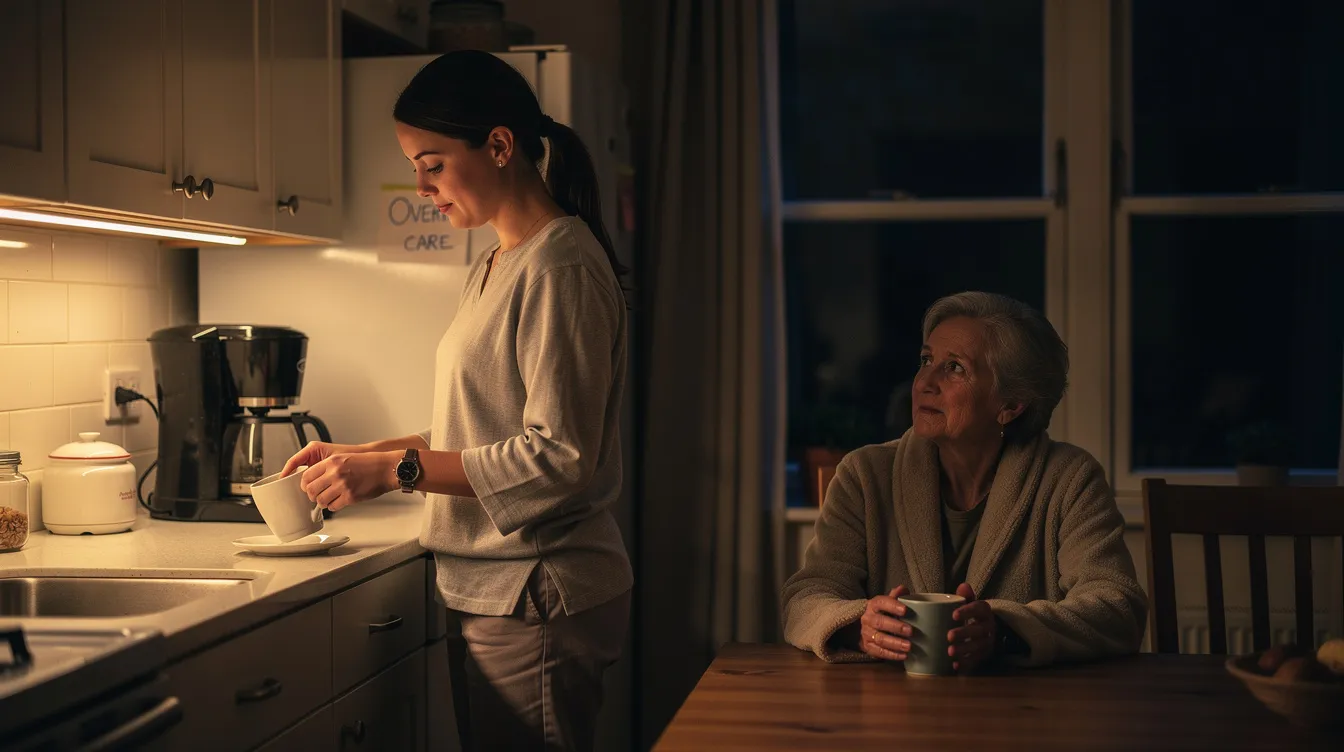
Overnight senior care is non-medical support provided in your parent’s home during the nighttime hours. A Care Professional can provide supervision, companionship, help with personal care or mobility, and other agreed non-medical support while family members rest.
The schedule depends on the amount and type of support needed overnight. For families who need coverage beyond the nighttime period, 24-hour care provides separate day and night coverage across the full day.
Common reasons families arrange overnight care include:
-
Help with bathroom trips or mobility during the night
-
Dementia-related wandering, confusion, or changes in routine after dark
-
Additional support after a hospital stay, including help with transfers and nighttime routines
-
A family caregiver needing relief from repeated nighttime wake-ups
In-home care can include personal care and companionship services. Personal care assists with activities such as bathing and dressing, while companion care provides social support and help with everyday routines. Depending on the care plan, non-medical support may also include meal preparation, light housekeeping, and transportation assistance.
Key Factors That Influence the Cost of Overnight In-Home Care
Overnight care costs are not one-size-fits-all. Several factors affect what you will pay in North Carolina, and understanding them helps you budget accurately.
Primary cost drivers include the amount of support needed, the number and length of overnight shifts, how many nights per week care is scheduled, and whether the family needs overnight-only or 24-hour coverage. A clear understanding of the nighttime support needed helps define the scope of care and the schedule being considered.
Typical Overnight Care Pricing in North Carolina
Overnight care may be priced differently depending on the provider and the structure of the shift. For BlueDot Cares, overnight in-home care is generally priced in the low-to-mid $30s per hour.
Overnight care costs generally increase as more nights or longer periods of coverage are scheduled. Families who need care every night will typically spend more per month than those who need support only a few nights per week.
How Overnight In-Home Care Compares to Other Senior Care Options
Overnight in-home care is one piece of a broader continuum that includes assisted living communities, memory care communities, and nursing homes. The right option depends on how much support a parent needs, how often that support is required, and whether remaining at home continues to fit the family’s circumstances.
When needs progress beyond what non-medical care can manage, BlueDot Cares’ senior placement services can help families evaluate assisted living or memory care options at no cost to the family because participating communities compensate the placement service.
What Overnight Support Can Include
Overnight care can be tailored to the non-medical support a parent needs during the night. Depending on the care plan, that may include companionship, help with toileting or mobility, assistance with personal care, support with nighttime routines, and calm redirection for dementia-related confusion or wandering.
The exact scope of support depends on the person’s needs and the overnight care arrangement being considered.
Estimating Your Monthly and Annual Cost of Overnight Senior Care
Turning a weekly care schedule into a realistic monthly and annual budget helps families understand their monthly costs and align care expenses with retirement income, savings, and long-term care insurance benefits.
Monthly and annual costs depend primarily on how many nights of care are scheduled and how long each shift lasts. A family arranging overnight care a few nights per week will generally spend less over the course of a month than a family arranging nightly or 24-hour coverage.
When building a longer-term budget, families can compare the expected cost of the current schedule with the cost of adding more nights if support needs change.

Financial Resources for Overnight In-Home Care
Families may use several different payment sources for overnight in-home care, depending on eligibility and the terms of any insurance coverage they already have.
-
Long-term care insurance: Some policies cover qualifying in-home personal care and other long-term care services. Coverage requirements, benefit triggers, waiting periods, and documentation vary by policy, so families should confirm the details directly with their insurer.
-
VA benefits: Eligible Veterans and surviving spouses who receive a VA pension may qualify for Aid and Attendance benefits if they meet additional requirements, including needing help with daily activities.
-
Medicaid: Eligible North Carolina residents may receive certain home and community based services through programs such as CAP/DA. BlueDot Cares does not accept Medicaid as payment for its own services.
-
Private pay: Families can also pay directly for overnight care using income or savings.
Medicare does not cover ongoing non-medical overnight care or 24-hour custodial care at home. It can cover qualifying intermittent home health services, including skilled nursing and therapy, when Medicare’s home health requirements are met.
Choosing an Overnight In-Home Care Provider
When comparing providers, look beyond the hourly rate and ask how Care Professionals are screened, trained, and supported.
Useful questions include:
-
What background checks and reference verification are completed before a Care Professional begins working with families?
-
What training is provided for personal care, safe transfers, mobility support, and dementia communication?
-
How does the agency handle schedule changes or a Care Professional becoming unavailable?
-
Which non-medical tasks are included in the care plan, such as personal care, companionship, meal preparation, light housekeeping, mobility assistance, and medication reminders?
Families considering an independent caregiver should also understand which scheduling, payroll taxes, insurance, and backup-coverage responsibilities they would manage directly.
BlueDot Cares provides non-medical overnight care in Charlotte and the Triangle. If you are comparing overnight support options, you can request a care assessment to discuss the support your parent needs, the schedule you are considering, and pricing for that care.

Jimmy Clonaris is Managing Partner at BlueDot Cares, where he oversees operations, caregiver standards, and service delivery for in-home care across the organization. With more than 19 years of experience in healthcare and over a decade with BlueDot, he has been directly involved in building and scaling care programs that support individuals aging at home.
His work focuses on the practical side of care delivery. This includes caregiver training and oversight, care plan consistency, and coordination with families and local healthcare professionals. Jimmy is actively involved in ensuring that care is not only well-structured on paper, but executed reliably in the home.
Over the course of his career, he has worked with thousands of families navigating care decisions, from short-term recovery support to long-term in-home care. His approach is grounded in clear communication, accountability, and building systems that allow caregivers to deliver consistent, high-quality support.
Under his leadership, BlueDot Cares has grown to support tens of thousands of families while maintaining a locally operated, relationship-driven model. He continues to focus on strengthening the team, improving care standards, and ensuring families have a dependable partner when care is needed.