Overnight Care That Supports Safety and Peace of Mind
Nighttime can become one of the most stressful parts of caring for an aging parent or loved one. Falls, wandering, confusion after dark, and interrupted sleep often leave families exhausted and constantly on alert. Overnight care for seniors can provide support during the hours when many emergencies and safety risks happen most often.
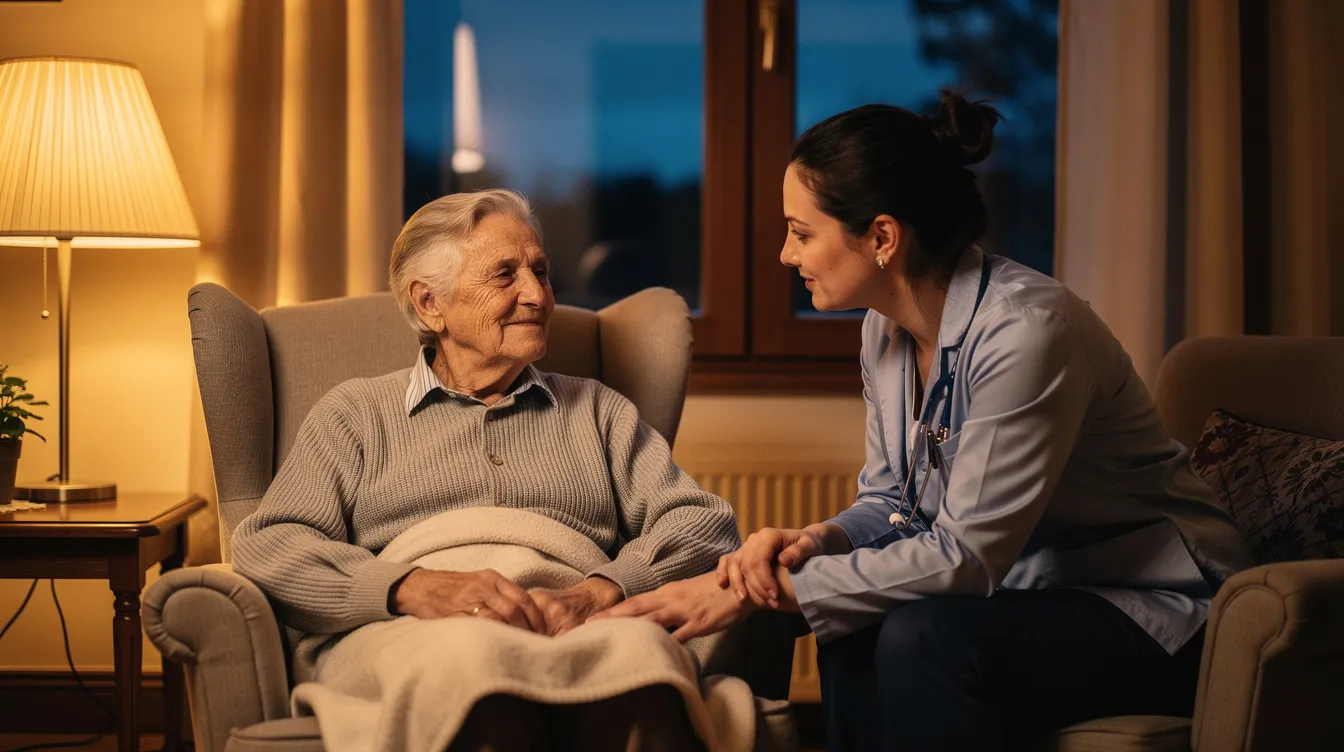
Overnight care places a trained, non-medical caregiver in the home during evening and overnight hours, typically for 10 to 12-hour shifts. The goal is to help seniors remain safe and comfortable in familiar surroundings while giving family caregivers the opportunity to rest.
BlueDot Cares (a trusted, 5-star-rated home care provider) provides overnight home care services in Charlotte and the Triangle, North Carolina, and helps families explore assisted living and memory care placement options when care needs become more advanced.
What Overnight Senior Care Includes
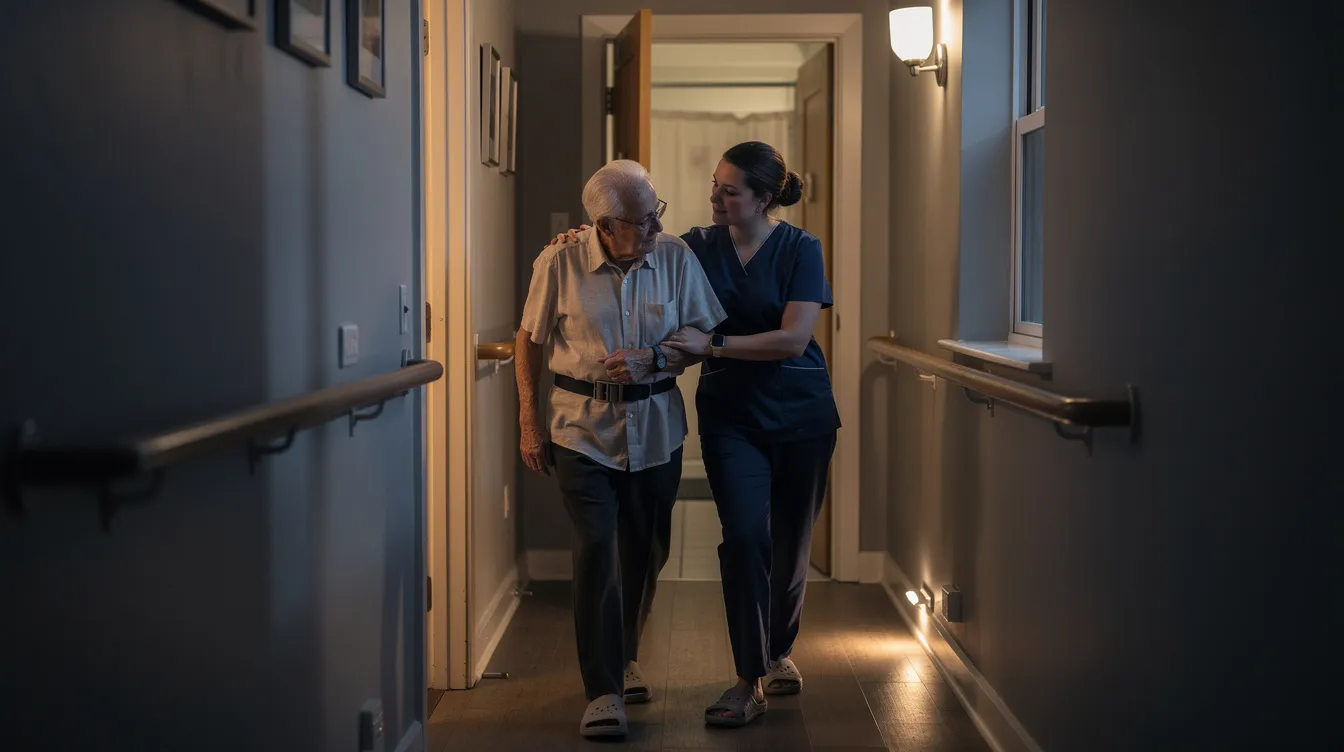
Overnight caregivers focus on safety, supervision, and mobility support rather than medical procedures. This type of non-medical home care helps seniors manage common nighttime challenges while maintaining dignity and independence. Overnight care for seniors is often used to provide added safety, supervision, and peace of mind during the hours when falls, confusion, and other risks are most likely to occur.
Overnight Care for Seniors Services May Include:
Assistance with bathroom visits
Fall prevention and mobility support
Medication reminders
Repositioning for comfort
Monitoring for wandering or confusion
Emotional reassurance during periods of confusion or distress
Help with personal hygiene and incontinence care
Many families choose overnight care because it allows loved ones to remain in a familiar home environment while reducing the stress of constant nighttime supervision.
Why Nighttime Is Risky for Seniors
Reduced lighting, slower reaction times, fatigue, and medication side effects can make nighttime especially dangerous for older adults. Falls often happen during late-night bathroom trips or moments of confusion after waking suddenly.
Common Nighttime Risks
|
Risk |
Why It Happens |
|---|---|
|
Falls |
Reduced visibility and balance issues |
|
Wandering |
Dementia-related confusion after dark |
|
Missed medications |
Interrupted sleep or memory issues |
|
Bathroom accidents |
Limited mobility and urgency |
|
Anxiety episodes |
Disorientation during nighttime waking |
|
For seniors living with dementia or Alzheimer’s disease, symptoms often worsen in the evening. This pattern, commonly called sundowning, can lead to agitation, wandering, or confusion after dark. |
“What we hear most from families is that nights become unpredictable. Someone who seemed mostly independent during the day may suddenly become confused, unsteady, or anxious after dark. Overnight care for seniors helps create a safer environment at home while giving families the ability to rest and recharge.”
— Jimmy Clonaris, Partner at BlueDot Cares
Signs a Loved One May Need Overnight Care
Many families begin exploring overnight care for seniors in their family after a frightening incident such as a fall, wandering episode, or emergency room visit. Earlier support can often reduce risks and help seniors remain at home longer.
Warning Signs to Watch For
Recent nighttime falls or near falls
Waking confused or disoriented
Wandering through the home after dark
Frequent bathroom assistance needs
Difficulty getting out of bed safely
Recovery after hospitalization or surgery
Dementia or Parkinson’s-related nighttime symptoms
Awake Overnight Care vs Sleep Overnight Care
Overnight care generally falls into two categories depending on the level of supervision required.
Comparison of Overnight Care Options
Type of Care Best For Caregiver Availability Awake Overnight Care Dementia, high fall risk, frequent bathroom assistance Caregiver remains awake all night Sleep Overnight Care Occasional assistance and reassurance Caregiver sleeps nearby and wakes as needed
Awake Overnight Care
Awake overnight care is often recommended for seniors who:
Wander due to dementia
Need assistance every one to two hours
Require close monitoring after surgery
Have unpredictable nighttime behaviors
Awake overnight care is one of the most common forms of overnight care for seniors who require continuous supervision, frequent assistance, or ongoing monitoring throughout the night.
Sleep Overnight Care
Sleep overnight care may work well for seniors who:
Mostly sleep independently
Need occasional bathroom support
Want reassurance that someone is nearby
Have stable nighttime routines
Sleep-overnight care is a form of overnight care for seniors that provides reassurance and occasional assistance while allowing a caregiver to remain nearby and available when needed.
Live-In Care and 24-Hour Support
Some seniors eventually require more than overnight coverage alone, and families often look for trusted, flexible in-home care services that can adapt as needs increase.
Live-In Caregivers
Live-in caregivers provide personal care and daytime assistance while remaining available overnight for urgent needs.
24-Hour Home Care
Twenty-four-hour care uses rotating caregiver shifts so that someone remains awake at all times, similar to how comprehensive home care services in Charlotte are structured to ensure consistent coverage.
This Level of Support May Be Needed For:
Advanced dementia
Severe mobility limitations
Frequent nighttime emergencies
Recovery after major surgery
Assistance with most daily activities

How Overnight Care Differs From Skilled Nursing
Families often confuse overnight home care with skilled nursing services. These services provide different types of support.
|
Overnight Home Care |
Skilled Nursing Care |
|---|---|
|
Non-medical support | Home healthcare services from licensed nurses |
|
Mobility assistance |
Wound care |
|
Supervision and safety |
IV medications |
|
Medication reminders |
Medical monitoring |
|
Emotional reassurance |
Rehabilitation therapies |
|
Some seniors receive both types of support after surgery or hospital discharge. |
Caregiver Qualifications and Family Communication
Families want reassurance that overnight caregivers are experienced, reliable, and prepared to respond during emergencies, often turning to reviews and testimonials from other families to feel confident in their choice.
BlueDot Cares develops care plans through in-home assessments that review:
Mobility concerns
Medications
Fall risks
Cognitive changes
Home safety issues
Care Coordination May Include:
Caregiver matching based on experience and personality
Home safety evaluations
Emergency response planning
Family updates and communication
Ongoing care plan adjustments
For seniors living with dementia, consistency and calm communication can significantly reduce distress and nighttime confusion.
Overnight Home Care vs Assisted Living Facilities
Many families compare overnight home care with assisted living or memory care communities. The right option depends on safety, medical needs, mobility, and quality of life.
In-Home Overnight Care May Be Best When:
A senior wants to remain at home
One-on-one support is beneficial
Family involvement is strong
Medical needs remain manageable
Assisted Living or Memory Care May Be Necessary When:
Wandering becomes dangerous
Medical complexity increases
Home safety is difficult to manage
Daily supervision needs become extensive
One Raleigh family began overnight care after their father, recovering from a fall, started waking several times each night, disoriented and attempting to walk without his walker. His daughter had been driving across town almost nightly because she feared another fall. After several weeks of overnight care for seniors, he became calmer at night, slept more consistently, and felt more confident moving around safely with assistance.

Overnight Dementia Care and Family Respite
Nighttime confusion and wandering are among the most difficult challenges families face when caring for someone with dementia, which is why overnight care for seniors is often used to provide added supervision, safety, and support during overnight hours.
Overnight Dementia Care May Include:
Continuous supervision
Calm redirection during wandering
Structured nighttime routines
Emotional reassurance
Monitoring for behavioral changes
Overnight care also supports family caregivers balancing work, parenting, and caregiving responsibilities. Reliable overnight coverage can help reduce burnout and make long-term caregiving more sustainable.
Reliable overnight care for seniors can help reduce caregiver burnout while providing families with added confidence that a loved one has support available throughout the night.
Cost Considerations and Scheduling Flexibility
Overnight care costs vary depending on the level of supervision required and the frequency of care. Awake overnight care generally costs more because the caregiver remains actively working throughout the shift.
Common Scheduling Options
Temporary care after hospital discharge
Two to three nights per week
Weekend overnight support
Full-time nightly care
Getting Started With Overnight Care
Starting care before a crisis often gives families more flexibility and better long-term outcomes.
The Process Typically Includes:
Initial consultation
In-home assessment
Home safety review
Care plan development
Caregiver matching
Ongoing communication and reassessment
Frequently Asked Questions
Is overnight care only for seniors with dementia?
No. Overnight care for seniors also supports individuals recovering from surgery, those with mobility limitations, and older adults who may be at risk of nighttime falls or confusion.
How long are overnight caregiver shifts?
Most overnight shifts last between 10 and 12 hours, commonly from evening through early morning.
Can overnight caregivers administer medications?
Overnight caregivers typically provide medication reminders rather than skilled medical administration unless licensed nursing care is separately arranged.
What is the difference between overnight care and 24-hour care?
Overnight care covers nighttime hours only. Twenty-four-hour care provides continuous support using rotating caregiver shifts.

Jimmy Clonaris is Managing Partner at BlueDot Cares, where he oversees operations, caregiver standards, and service delivery for in-home care across the organization. With more than 19 years of experience in healthcare and over a decade with BlueDot, he has been directly involved in building and scaling care programs that support individuals aging at home.
His work focuses on the practical side of care delivery. This includes caregiver training and oversight, care plan consistency, and coordination with families and local healthcare professionals. Jimmy is actively involved in ensuring that care is not only well-structured on paper, but executed reliably in the home.
Over the course of his career, he has worked with thousands of families navigating care decisions, from short-term recovery support to long-term in-home care. His approach is grounded in clear communication, accountability, and building systems that allow caregivers to deliver consistent, high-quality support.
Under his leadership, BlueDot Cares has grown to support tens of thousands of families while maintaining a locally operated, relationship-driven model. He continues to focus on strengthening the team, improving care standards, and ensuring families have a dependable partner when care is needed.