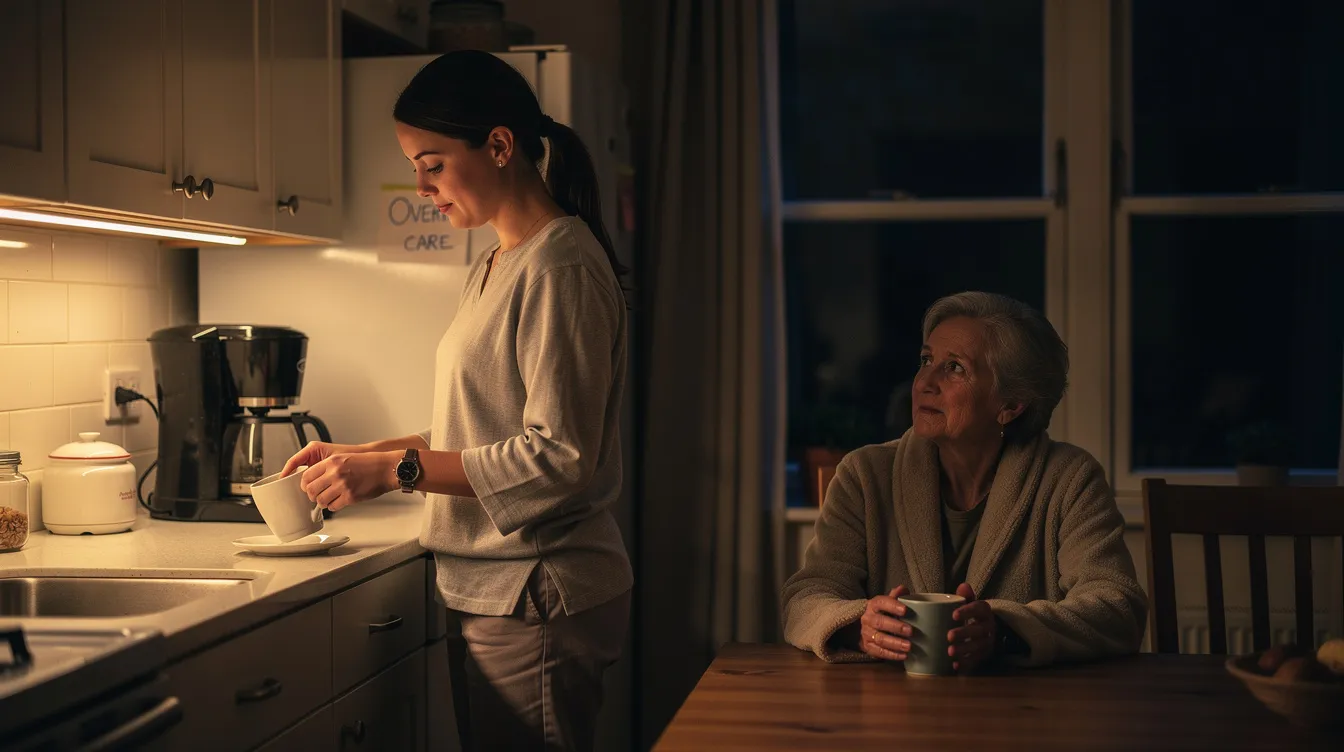
Changes in an aging parent often happen gradually, in small ways that are easy to miss over phone calls or video chats.
A Thanksgiving visit gives you something a screen cannot: the chance to sit at your parent’s table, walk through their home, and simply notice. This guide is for adult children visiting aging parents in Charlotte and the Triangle, with practical signs your parent needs help at home and gentle ways to talk about it.
In this guide, you will find what to notice around the house, in meals, personal hygiene, mobility, mood, driving, and organization, how to keep notes during your visit, and how to start a conversation about support. It is written for adult children who want a calm, practical starting point.
None of these signs is a diagnosis. They are things to notice, write down, and talk about with your mom or dad and, when appropriate, their doctor.
Start With a Quiet Look Around
Before you rearrange anything, take a quiet look. Your aim is to notice what has changed since your last visit.
Respect your parent’s home and avoid unnecessary disruptions, since it is their space.
Track Changes Across Several Areas
Recognizing when a parent needs help can be subtle because changes are often gradual. It helps to track changes across several areas of life, including the home, meals, personal care, mobility, mood, and organization, rather than reacting to a single moment.
What to Look For First
- Expired food or a crowded refrigerator
- Stacks of unopened mail or unpaid notices
- Trash that has not been taken out
- Clutter or loose rugs near entryways and stairs
Then notice your parent. Are they wearing the same clothes as last time, or do clothes hang more loosely? These observations are conversation starters, not conclusions.
When Parents Age: Changing Needs Over Time
As parents age, their needs can change gradually, and a routine that worked last year may feel harder now.
Some aging adults want to remain in their own homes, and noticing changing needs can give your family a starting point for discussing what support might fit. Every caregiving journey looks different, and there is no single right timeline.
Signs Your Parent Needs Help at Home: Around the House
Sit at the kitchen table and look around. The details often tell the story. Changes in housekeeping can be one sign that everyday tasks have become harder to manage.
Mail and Paperwork
Unopened bills, duplicate payments, or letters piling up can show that keeping up with paperwork has become harder.
Ask gently whether bills to pay and mail feel like a lot to manage.
Housekeeping and Laundry
Dust, full laundry hampers, or dishes left for days may mean daily tasks are taking more effort than they used to.
The Kitchen
Spoiled food, an unused stove, or takeout containers filling the trash can show that cooking or shopping has become tiring.
Ask gently whether vacuuming, laundry, or grocery shopping feels heavier than it used to. Light housekeeping and meal preparation are part of non-medical home care services and can provide practical support with daily routines and daily tasks.
Meals and Nutrition
Open the refrigerator and look at the pantry. Mold on leftovers, very little fresh food, or rows of the same frozen dinner may suggest cooking or shopping has become tiring.
Notice whether your parent seems to have lost weight, and whether they skip meals when no one is around.
Ask open questions: “Do you still enjoy cooking?” or “What part of making dinner is hardest now?” Sudden weight loss or unexplained weight loss is worth mentioning to their doctor, because it can have many causes.
Personal Care and Personal Hygiene
Bathing, dressing, and grooming can become more tiring or less steady. Poor personal hygiene can suggest difficulty with daily tasks.
Possible signs include wearing the same outfit all weekend, unwashed hair, long fingernails, or a bathroom that looks unused. Check whether the shower feels safe and whether there are grab bars and a non-slip mat.
Changes in personal hygiene do not automatically mean illness. They can mean your parent finds a task difficult. Some aging adults may feel uncomfortable asking their children for this kind of help, and a Care Professional can support personal care with privacy and respect.
Mobility and Physical Health
Watch how your parent moves through the house compared with past years.
- Holding furniture or countertops for balance
- Hesitating on stairs or the front steps
- Difficulty standing from the couch
- Frequent falls or unexplained bruises, which can suggest changes in physical capability
Changes in personal care or mobility can be signs that a parent may need assistance. Mention frequent falls or bruising to their doctor.
Our guide to reducing falls in seniors at home has practical ideas for walkways and rooms.
Mood, Mental Health, and Social Life
Watch how your parent joins in holiday traditions compared with past years.
Mood and Social Changes
Pulling away from conversations, turning down invitations, or comments about feeling lonely in the evenings can be worth noticing.
Social withdrawal can be associated with low mood and with social isolation, and it can also have many other causes. Signs of worry, such as increased anxiety about small things, may be a reason to talk with a doctor.
Evening Confusion
Some people with Alzheimer’s disease or another dementia become more confused or restless in the late afternoon or evening, which is sometimes called sundowning. If you notice this, mention it to a doctor.
Memory and Thinking
Repeating questions, memory loss that affects daily routines, or trouble following a conversation can have many causes, and dementia is one of them. Increased forgetfulness or forgetting scheduled appointments may be worth raising with a doctor, who can evaluate whether it reflects cognitive decline or another condition.
Confusion during daily activities, or unusual fears and suspicions, are also worth mentioning. Significant changes in behavior may be a reason to ask about additional support. If you notice sudden confusion or a sudden change, tell a doctor promptly.
Many things can explain these changes, including pain, fatigue, grief, medications, or memory concerns. Ask open questions rather than assume a cause. “How are your evenings going?” can open space for honesty.
Our guide to signs of loneliness in an aging parent covers social changes in more depth, and caring for someone with dementia explains memory changes. If you are wondering about next steps, see what to do if a parent has dementia.
Driving, Appointments, and Staying Organized
Ride along to the grocery store or an appointment. Changes in driving can be a sign worth discussing, such as missed turns, new scrapes on the car, or reluctance to drive after dark.
Driving
Notice confusion at familiar intersections or sudden hard braking. These can be conversation starters about driving safety, and a doctor can help evaluate concerns.
Calendar and Medications
Look at the calendar and the medication list: refills ordered late, pills sitting unused, or missed checkups can show that keeping track has become harder.
Offer to sit down with your parent after the holiday to review their calendar, medications, and appointments together. Keep a list of contact information for their doctor and pharmacy where you can find it.
Non-medical in-home care can include reminders, accompaniment to appointments, and transportation assistance.
A Simple Way to Keep Notes
You will see a lot in a few days, and it is easy to forget details by the time you are home. Consider keeping a short note on your phone:
- What you noticed, with the room or situation
- What your parent said about it, in their own words
- Questions to ask their doctor
- Tasks that seem hardest, such as stairs, shopping, or paperwork
Notes can give later conversations with your parent, siblings, or providers a more specific reference point. Keep the focus on what your parent wants to keep doing, not only on what has become difficult.
When You Cannot Stay Long
Not everyone can spend several days. If your visit is short, choose two or three things to look at, such as the kitchen, the mail, and how your parent moves around the house.
Plan a follow-up phone call or video call for the week after, and ask a neighbor, friend, or relative who sees your parent more often what they have noticed.
Talking About Help
Choose a calm moment, such as Friday morning over coffee, rather than the middle of the Thanksgiving meal. Begin with partnership rather than concern:
“I noticed some mail on the table. How has it been keeping up with bills lately?”
Involve your parent in discussions about their care options. Ask what feels most tiring and what your parent most wants to keep doing for themselves. Listen first, and recognize the importance of what you hear.
If your parent has memory changes, adjust how you communicate: use short sentences, give one question at a time, and allow extra time to answer.
Tips for Adult Children
For example, you might say, “I want to make sure things stay easy for you at home. What would help most?” Ask rather than tell, and give your parent time to answer.
Bringing in Family Members
Invite family members to share what they see too, so one person does not carry the planning alone. For legal and financial questions, such as a power of attorney, speak with an elder law attorney.
Looking After Yourself
Caregiving can be tiring, and caregiver burnout is a term commonly used for the exhaustion that can build over time. Caregiver support groups connect people with shared experiences. Our page on dementia caregiver support groups is one place to start, and respite care can offer temporary relief for family caregivers.
Your own well-being matters alongside your parent’s needs.
Senior Care and Home Care Services
BlueDot Cares provides non-medical in-home care for aging adults in Charlotte and the Triangle, including personal care, companion care, meal preparation, light housekeeping, transportation assistance, respite care, and overnight and 24-hour care. These home care services can support an aging adult with daily routines at home.
The amount and type of support depend on the aging adult’s needs and the care arrangement being considered. Our Care Professionals support, structure, and accompany aging adults with the routines they want to keep. Local community programs, such as senior centers, can also be part of the picture.
If a family’s needs or circumstances lead them to consider a different care setting, BlueDot Cares offers no-cost senior placement guidance for families considering assisted living, memory care, a senior living community, or independent living communities. If you would like to talk through what you noticed this Thanksgiving, we welcome a conversation.


Jimmy Clonaris is Managing Partner at BlueDot Cares, where he oversees operations, caregiver standards, and service delivery for in-home care across the organization. With more than 19 years of experience in healthcare and over a decade with BlueDot, he has been directly involved in building and scaling care programs that support individuals aging at home.
His work focuses on the practical side of care delivery. This includes caregiver training and oversight, care plan consistency, and coordination with families and local healthcare professionals. Jimmy is actively involved in ensuring that care is not only well-structured on paper, but executed reliably in the home.
Over the course of his career, he has worked with thousands of families navigating care decisions, from short-term recovery support to long-term in-home care. His approach is grounded in clear communication, accountability, and building systems that allow caregivers to deliver consistent, high-quality support.
Under his leadership, BlueDot Cares has grown to support tens of thousands of families while maintaining a locally operated, relationship-driven model. He continues to focus on strengthening the team, improving care standards, and ensuring families have a dependable partner when care is needed.